
Tarangire National Park is one of Tanzania’s most visually recognizable wilderness areas. Its ancient baobabs, winding river, open plains, acacia woodland, seasonal marshes and warm earth tones create a landscape that is both powerful and intimate.
For photography, Tarangire is not only about wildlife density. It is about the relationship between animals, trees, dust, light and space. Elephants moving beneath baobabs, giraffes standing against open horizons, lions resting in trees, birds along the water, antelopes in soft vegetation and quiet scenes at sunset all contribute to the photographic identity of the park.
For me, wildlife photography in Tarangire is a way of working with scale and atmosphere. The animal is rarely separate from the landscape. An elephant herd becomes stronger when the baobabs remain in the frame. A giraffe becomes more elegant when its shape is balanced against open sky. A bird becomes more graphic when water, reeds or reflected light simplify the scene.
This portfolio gathers a selection of color images from Tarangire National Park: elephants, giraffes, tree-climbing lions, cheetah, birds, ostriches, antelopes, zebras, landscapes and moments where the character of the place is shaped by light, silence, scale and natural behaviour.
Tarangire is one of those places where the photograph often carries the feeling of the whole park: warm light, dry earth, ancient trees and wildlife moving quietly through a landscape that feels both open and intimate.
Photograph Tarangire during a Northern Tanzania safari
Tarangire is included in my January 2027 Great Migration Calving Season photographic safari. It is the ideal first stage of the journey, with elephants, baobabs, birds, giraffes and warm landscapes before continuing towards Ngorongoro, Ndutu and Central Serengeti.
For photographers, Tarangire adds scale, atmosphere and one of the most distinctive visual identities in Northern Tanzania. It gives the journey a slower and more grounded opening before the density of Ngorongoro and the drama of the Great Migration calving season in Ndutu.
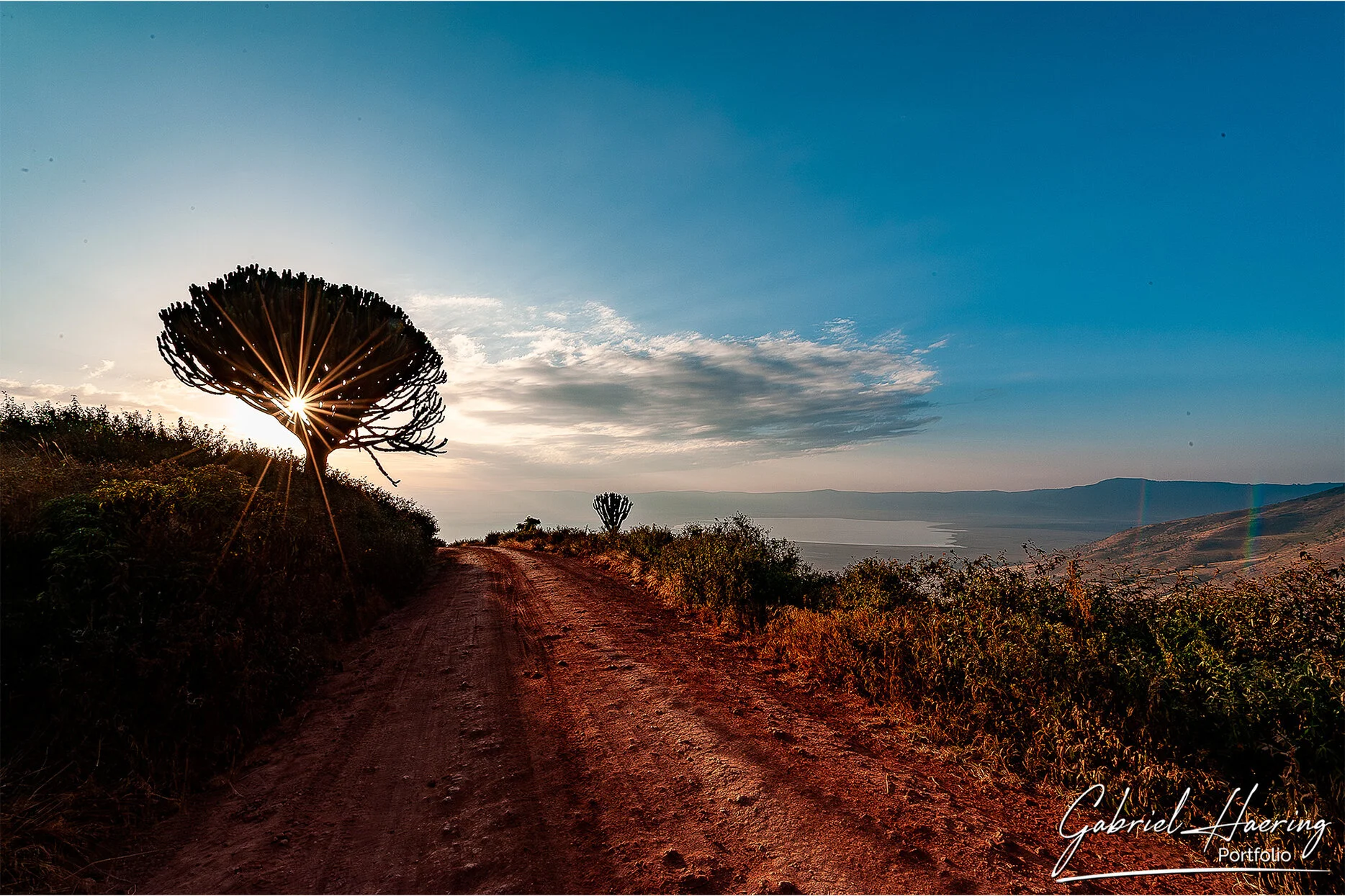
The January 2027 safari combines Tarangire, Ngorongoro, Ndutu and Central Serengeti. This creates a strong photographic progression: elephants and baobabs in Tarangire, crater wildlife and volcanic landscapes in Ngorongoro, newborn wildebeest and predator behaviour in Ndutu, and classic Serengeti plains around Central Serengeti.
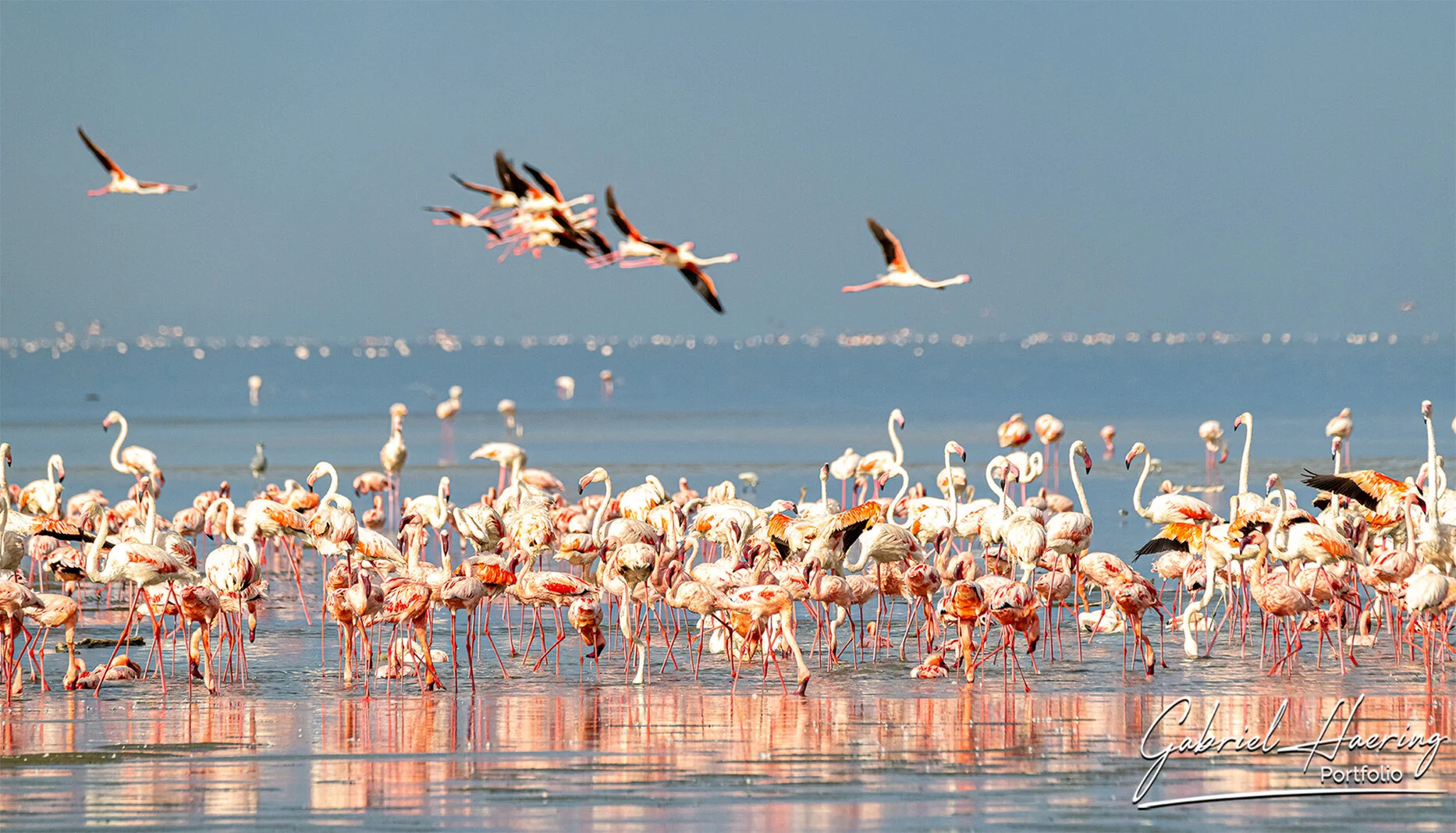
Tarangire can also be included in a tailor-made Northern Tanzania photographic safari, especially in combination with Lake Natron. This creates a more personal route, linking elephants, baobabs and riverine wildlife in Tarangire with flamingos, volcanic landscapes, reflections and the graphic atmosphere of Lake Natron.
With a small group and a photographic rhythm, the aim is not simply to move through the park, but to give enough time to work with light, behaviour, composition and the quiet visual identity that makes Tarangire so memorable.
Tarangire image gallery
Photographic approach in Tarangire
Working with baobabs, light and open space
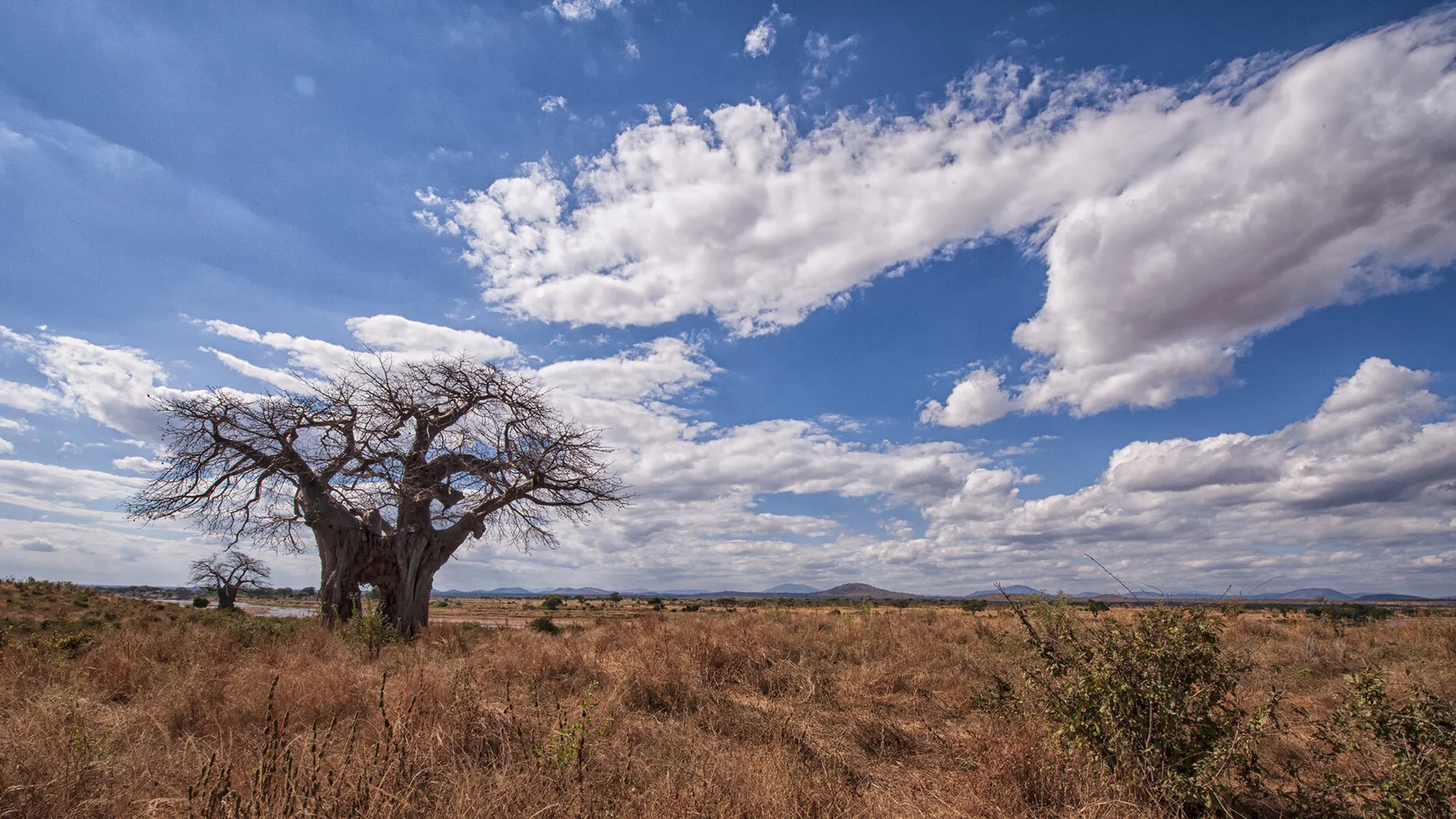
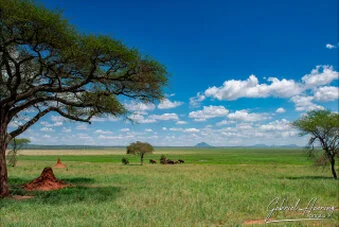
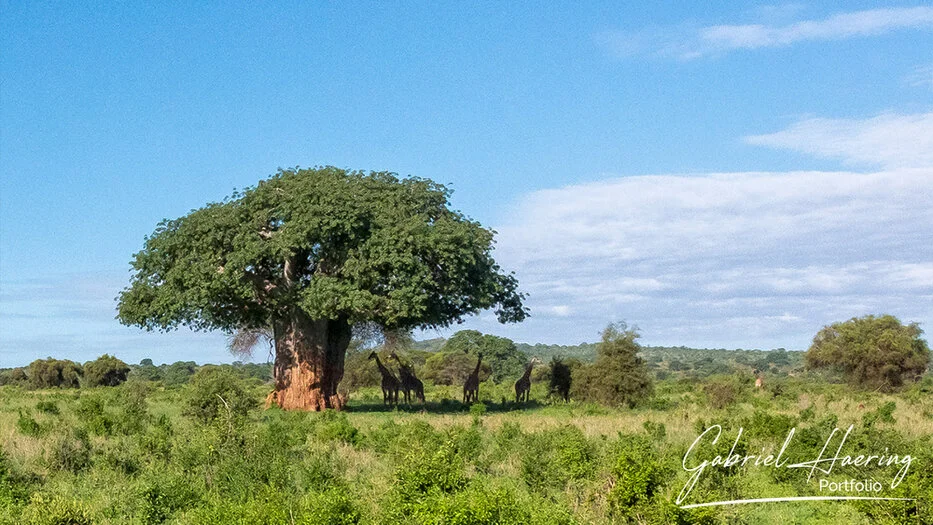
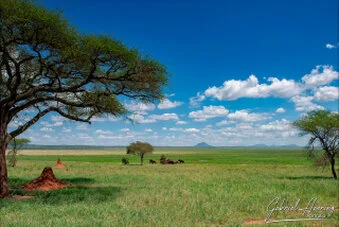
Tarangire draws me again and again through its extraordinary sense of atmosphere. The landscape is immediately recognizable: ancient baobabs, pale grasses, red earth, acacia woodland, riverine vegetation and wide open views that allow animals to become part of the environment rather than isolated subjects.
This is what makes Tarangire wildlife photography so distinctive. The background is never just background. It is part of the photographic story.
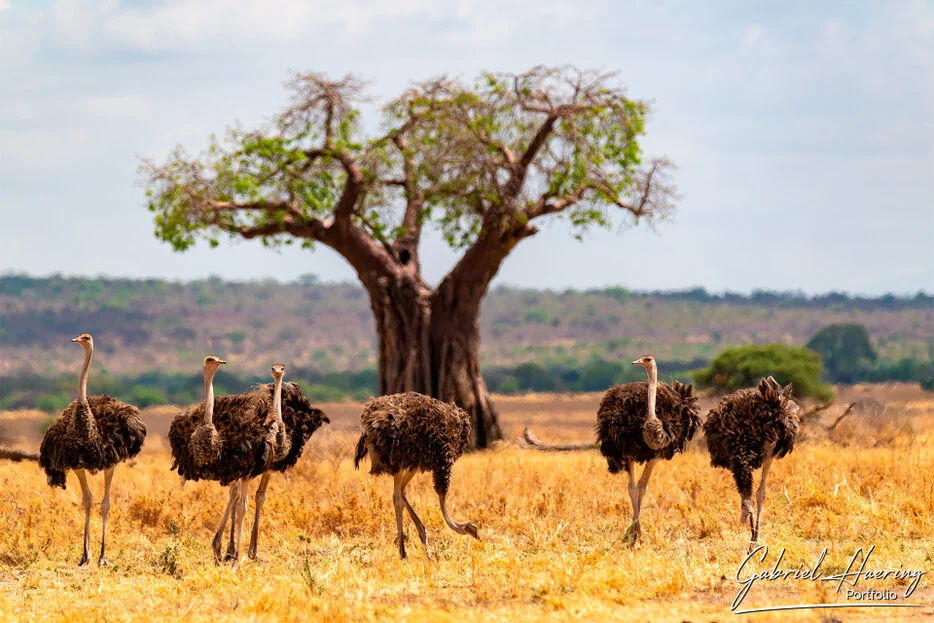
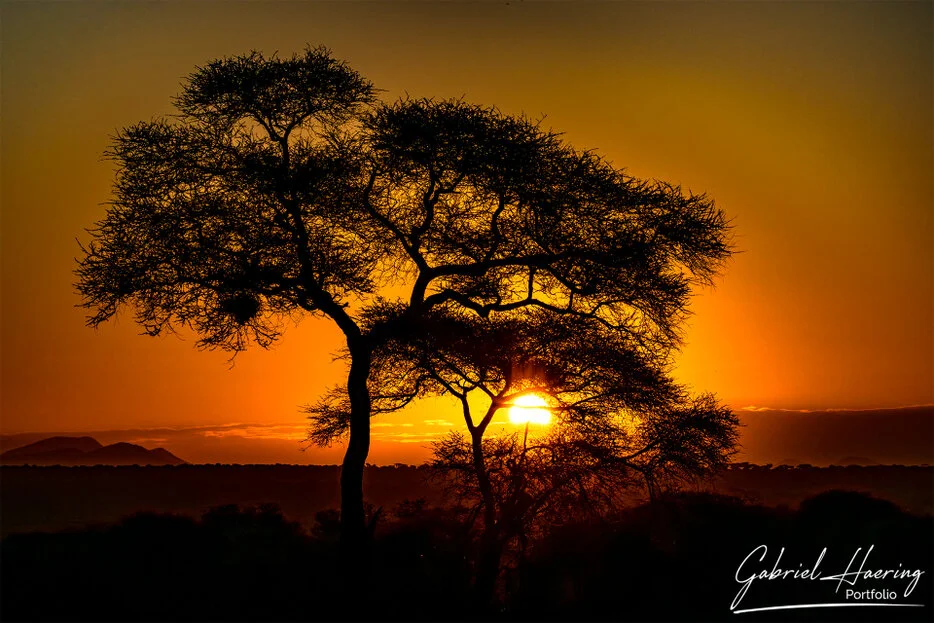
I often look for scenes where the wildlife and the landscape support each other visually: a giraffe near a baobab, elephants moving through green or golden grass, an ostrich group crossing an open plain, or a single tree silhouetted against the warm sky.
In Tarangire, the photographer often works with space as much as with subject. The strongest image may not be the closest animal, but the moment when animal, tree, light and landscape fall into balance.
Elephants and the Tarangire River
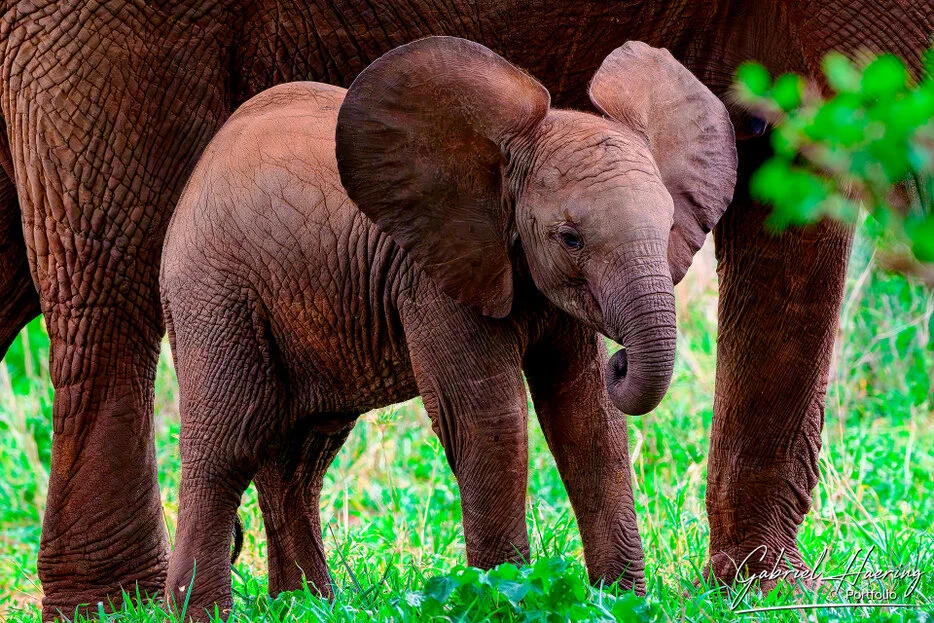
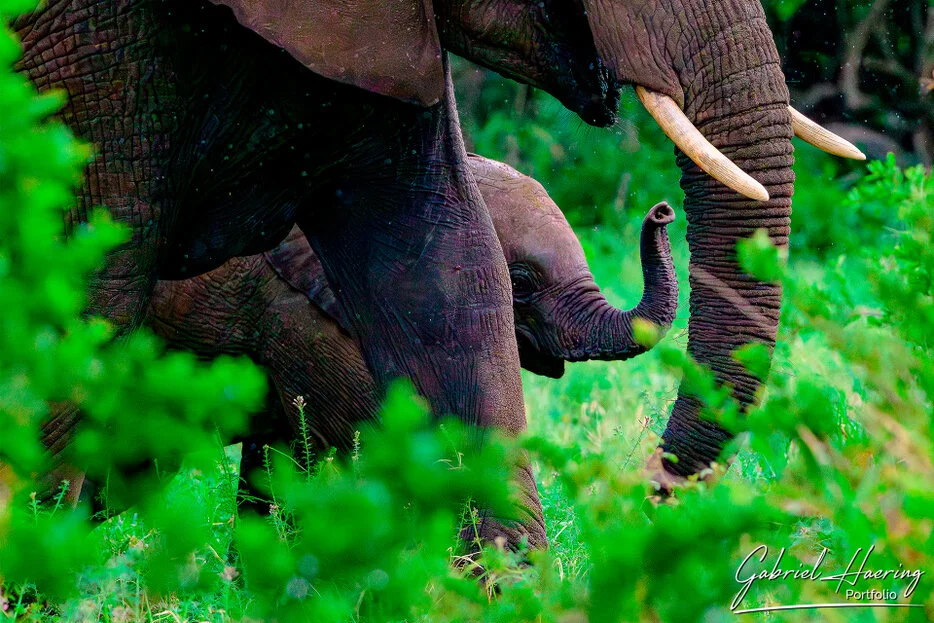
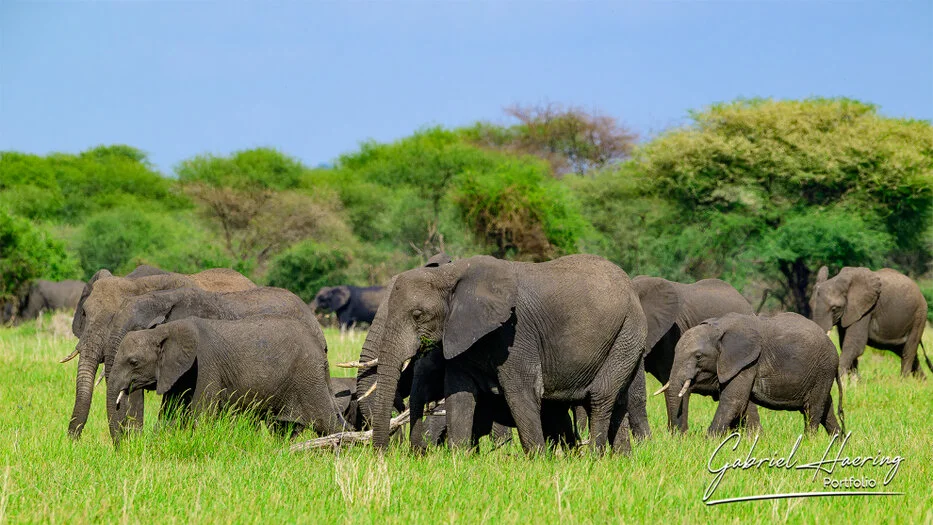
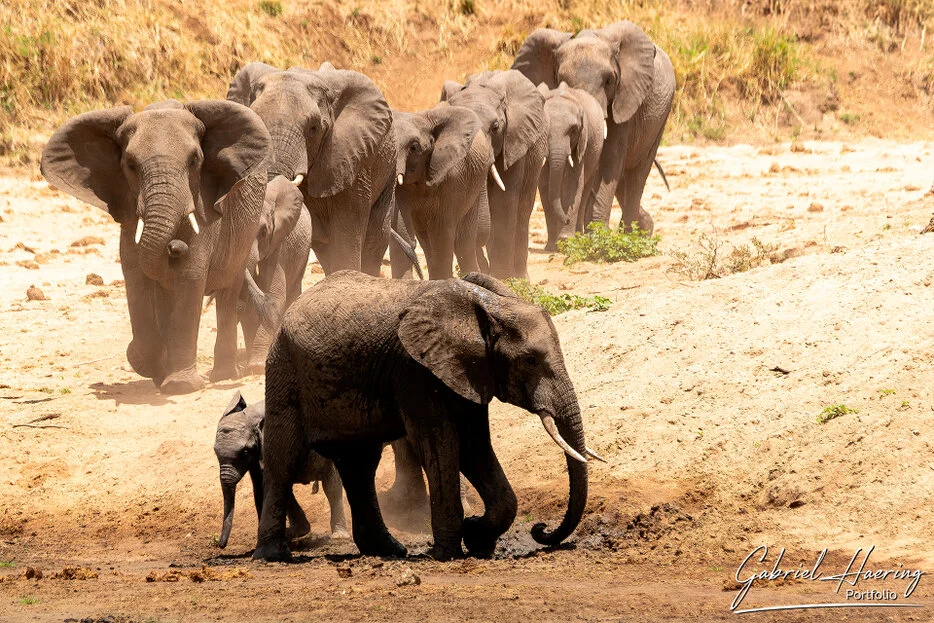
Elephants are one of the great visual symbols of Tarangire. Their presence gives the park scale, emotion and rhythm. Families moving through grass, calves protected between adults, herds walking through dust or gathering near water all create strong photographic opportunities.
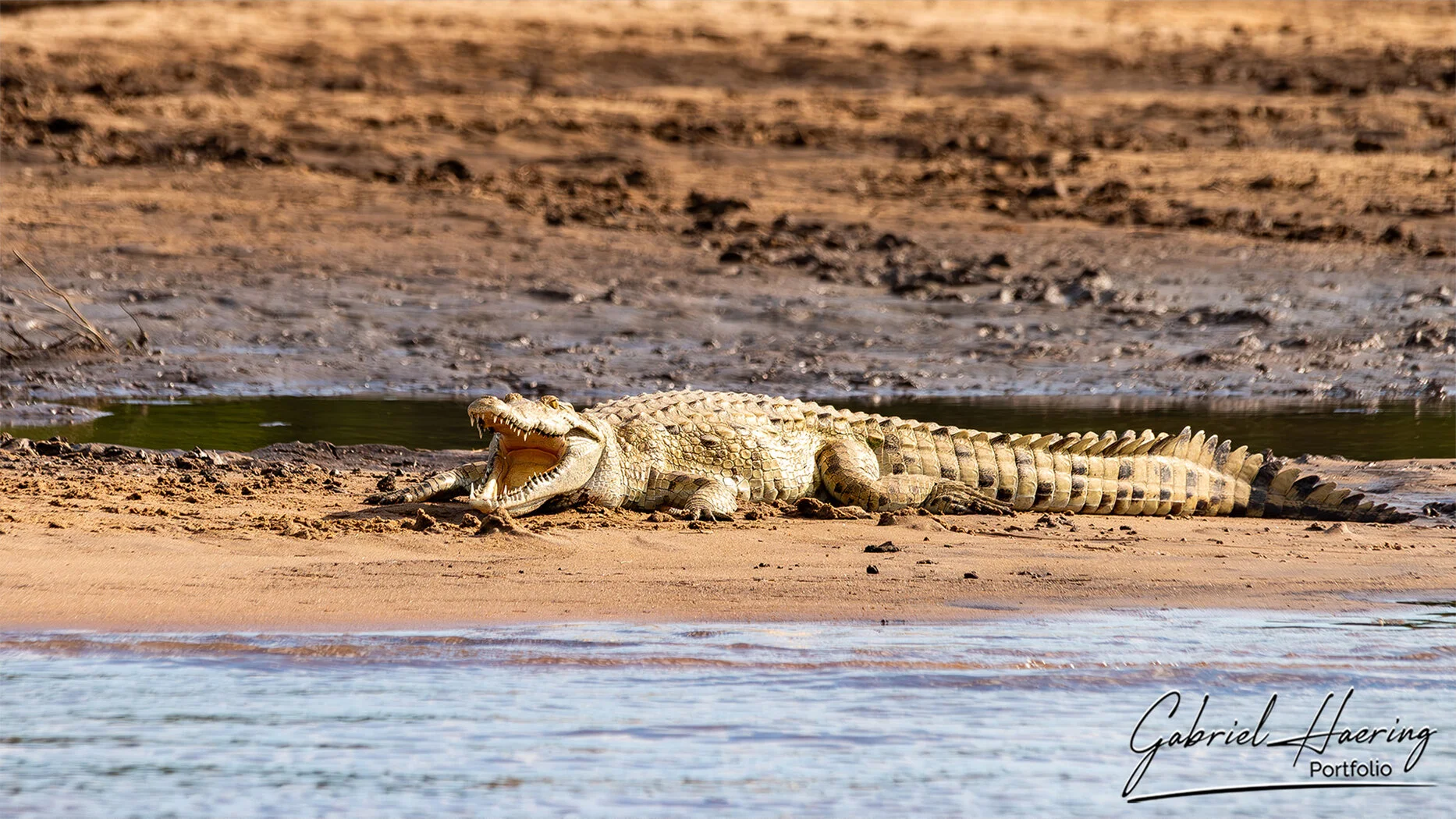
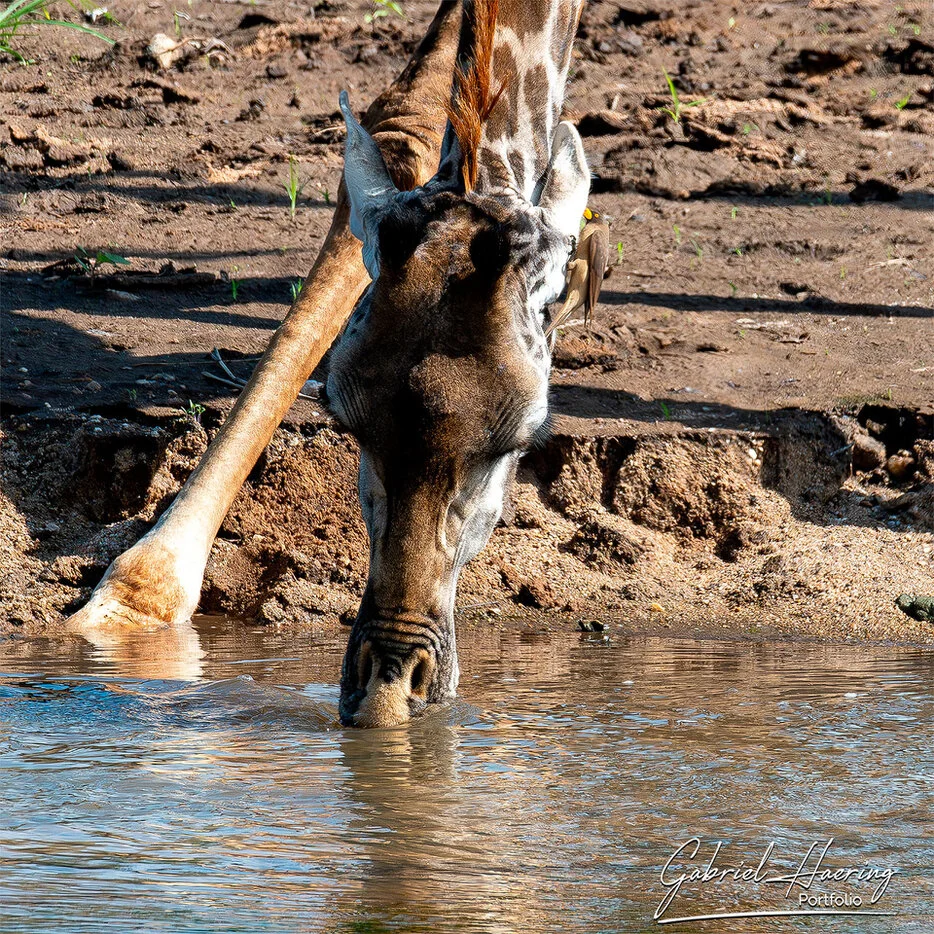
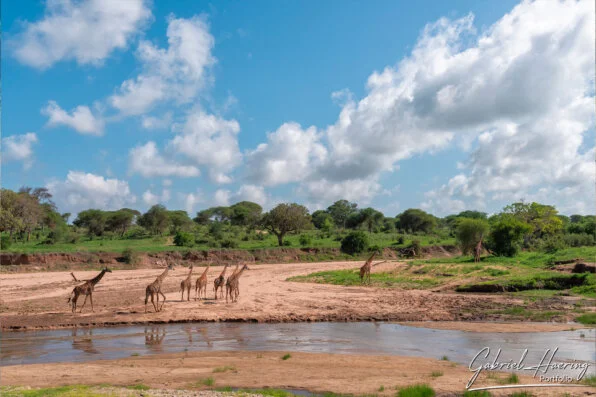
The Tarangire River is central to this visual language. During the dry season especially, it concentrates wildlife and creates moments of movement, tension and interaction. A line of elephants approaching the water, a giraffe drinking carefully, birds feeding in the shallows or antelopes gathering near the riverbank can all become images where behaviour and landscape are inseparable.
For wildlife photography in Tarangire, elephants are not only impressive subjects. They help express the character of the park itself: ancient, patient, social and deeply connected to the land.
Giraffes, antelopes and elegant forms
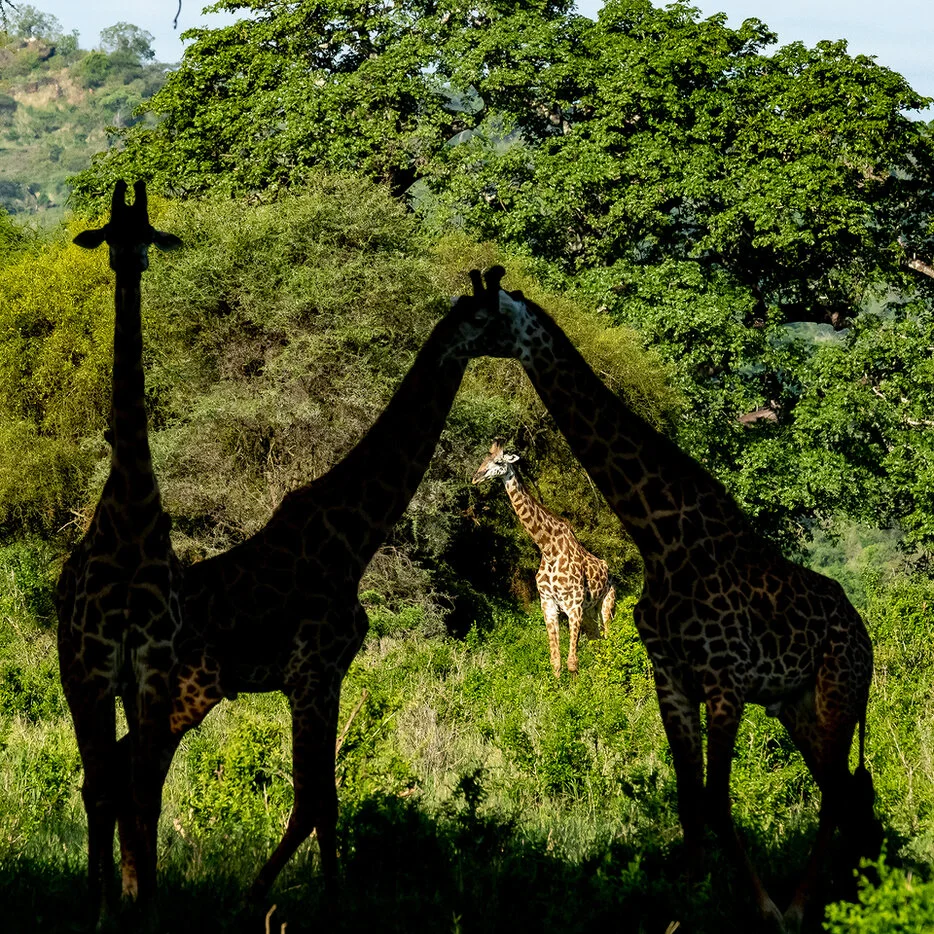
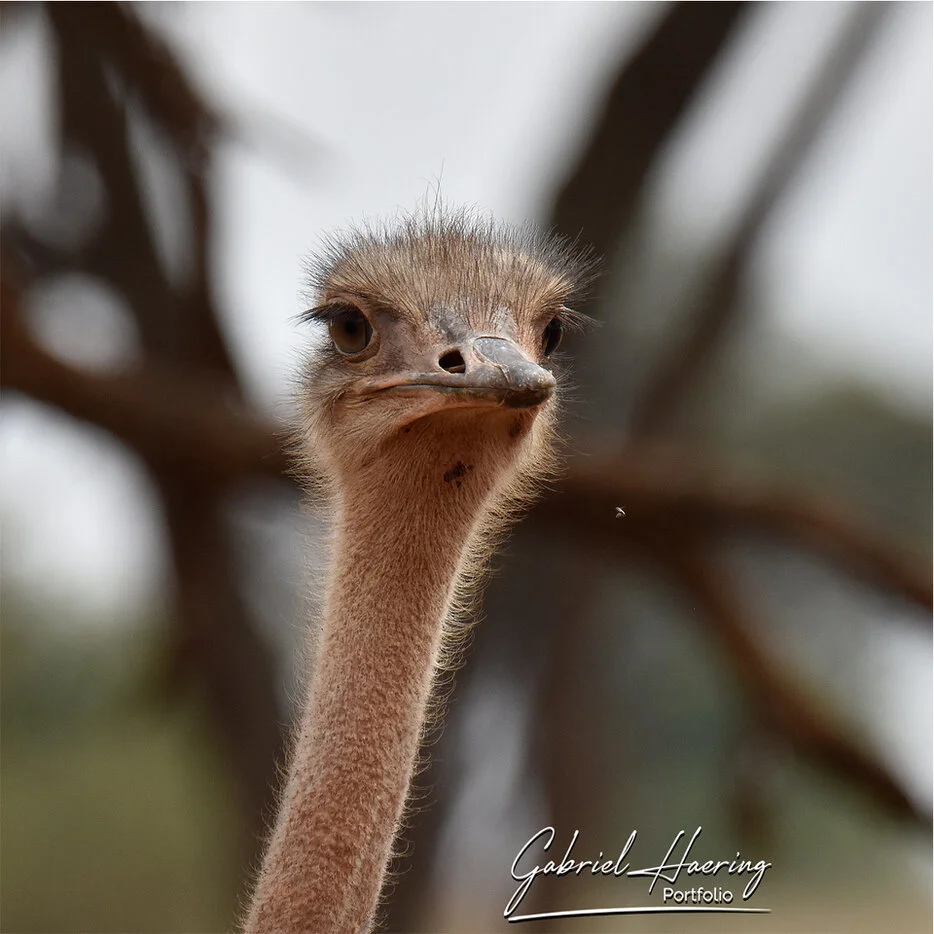
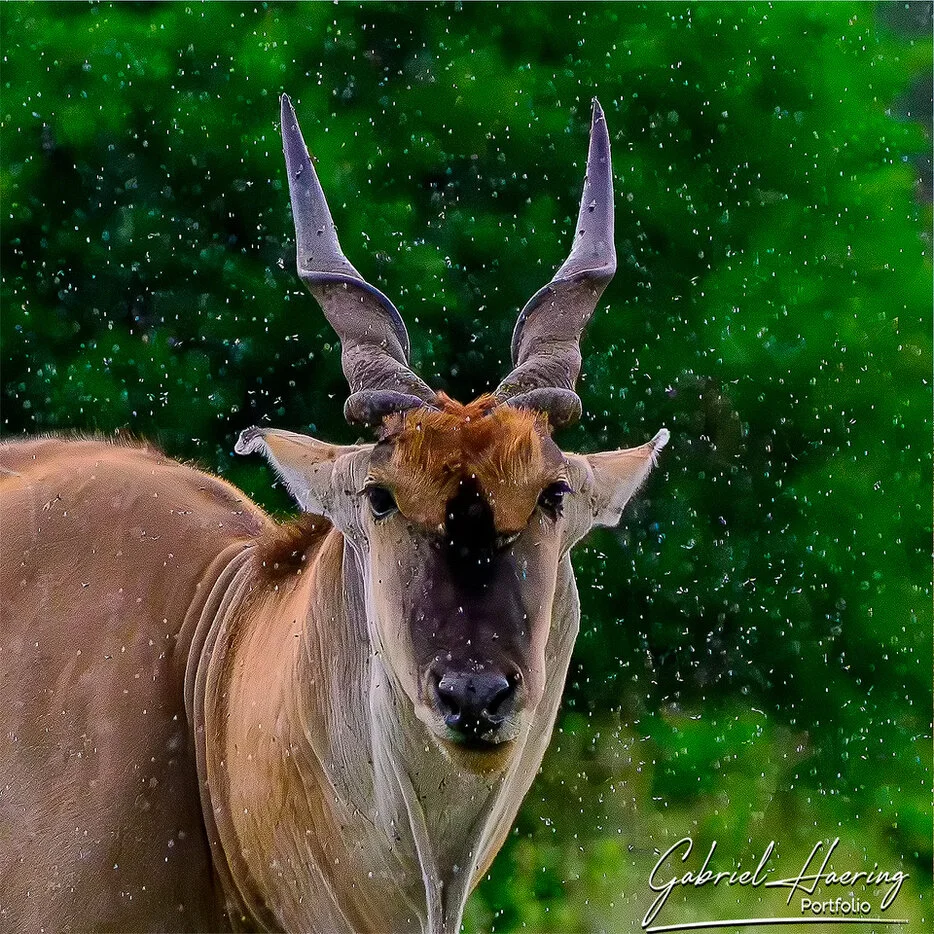
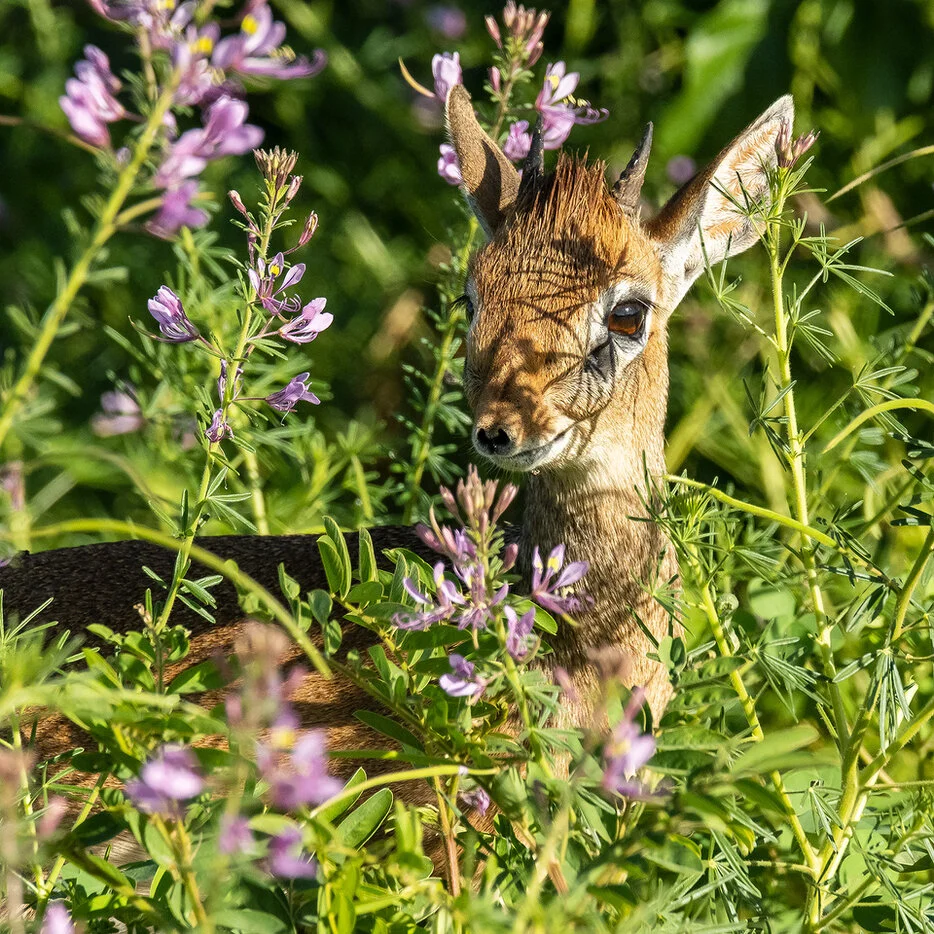
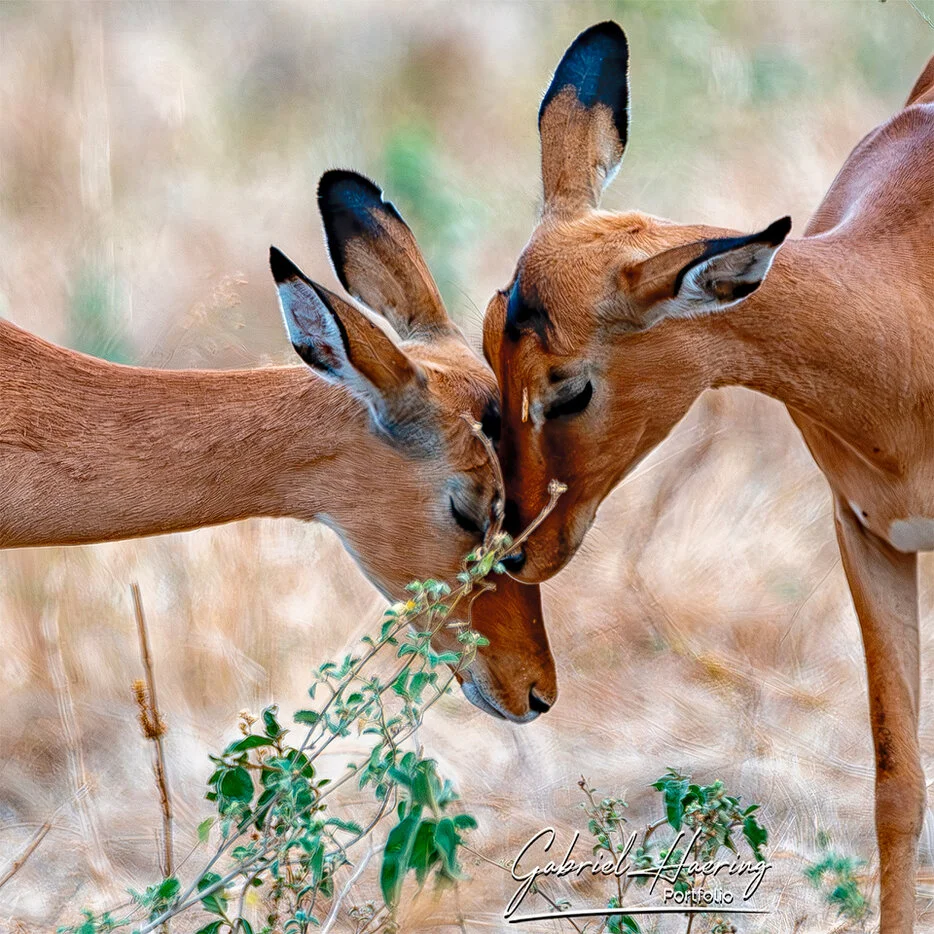
Tarangire is also a park of elegant shapes. Giraffes, impalas, dik-diks, elands, zebras and ostriches bring a quieter visual rhythm to the portfolio. Their forms work beautifully with the park’s open spaces, filtered light and vegetation.
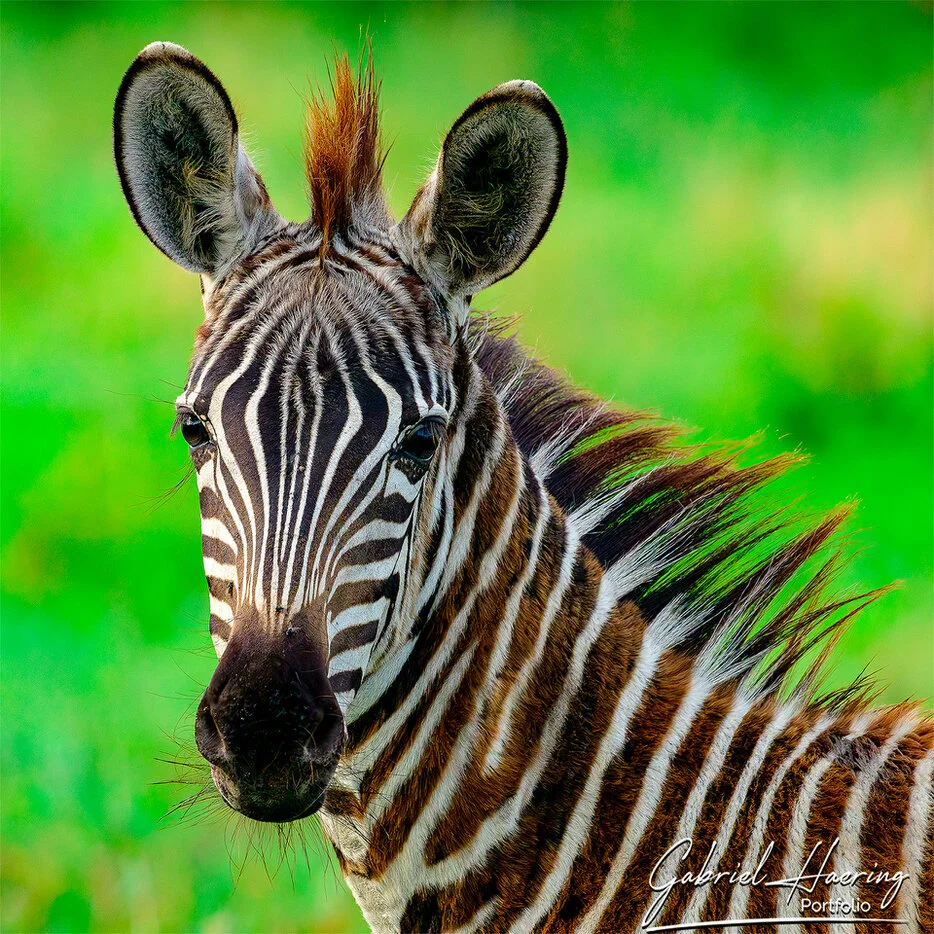
I am often drawn to these more delicate scenes: a giraffe framed by shadows, a dik-dik partly hidden among flowers, impalas feeding together, an eland surrounded by insects, or a zebra portrait against a luminous green background.
These images may be less dramatic than predator encounters, but they often express the softer and more intimate side of Tarangire. They remind me that wildlife photography is not only about action. It is also about grace, form and the small moments that reveal the mood of a place.
Photographic approach in Tarangire
Birds, water and graphic detail
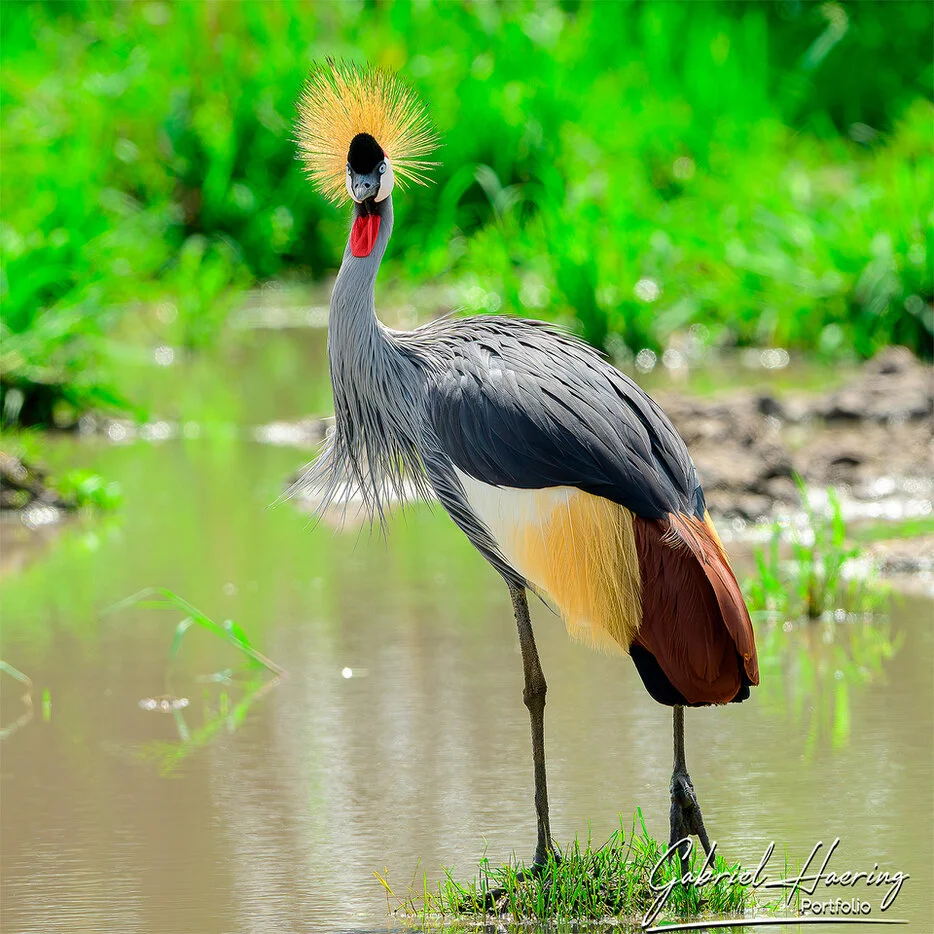
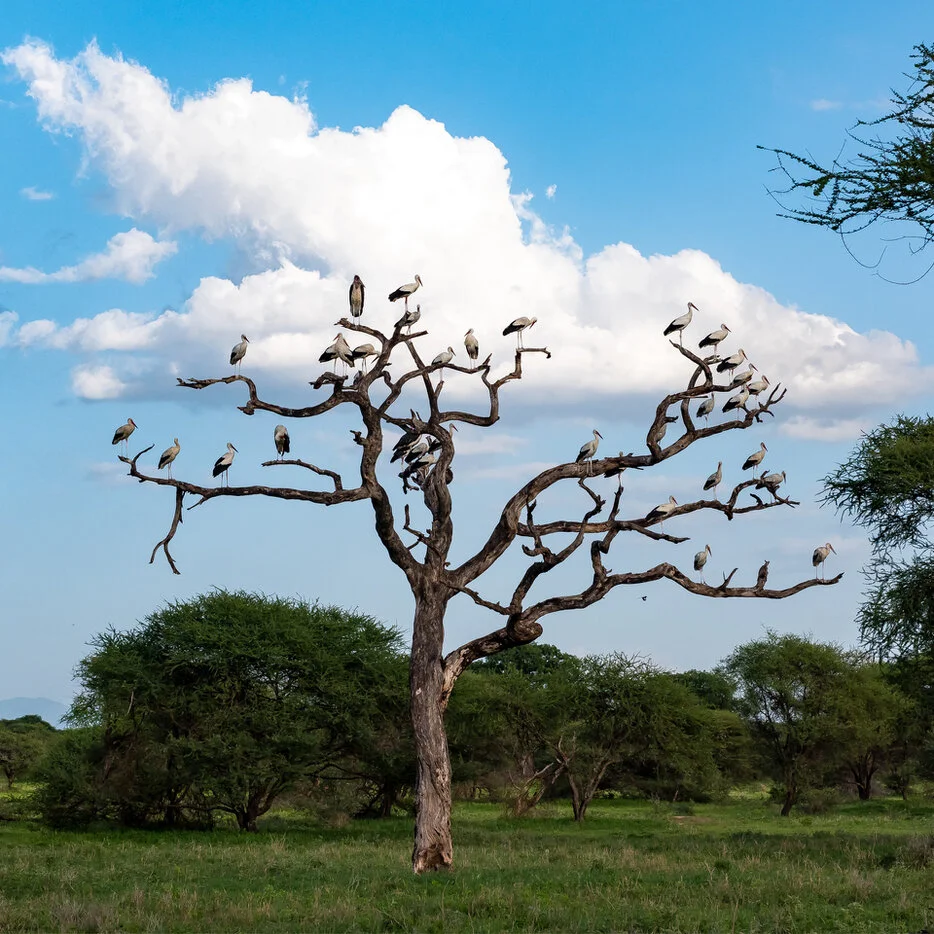
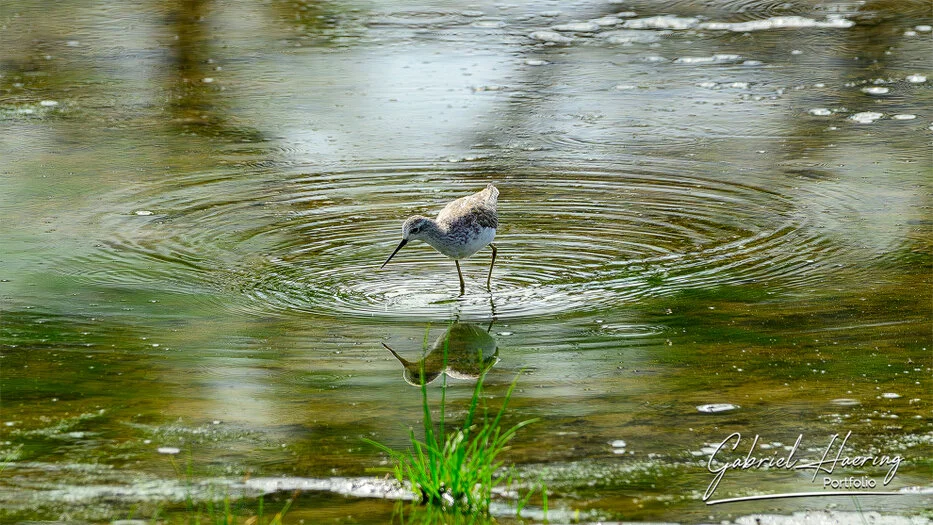
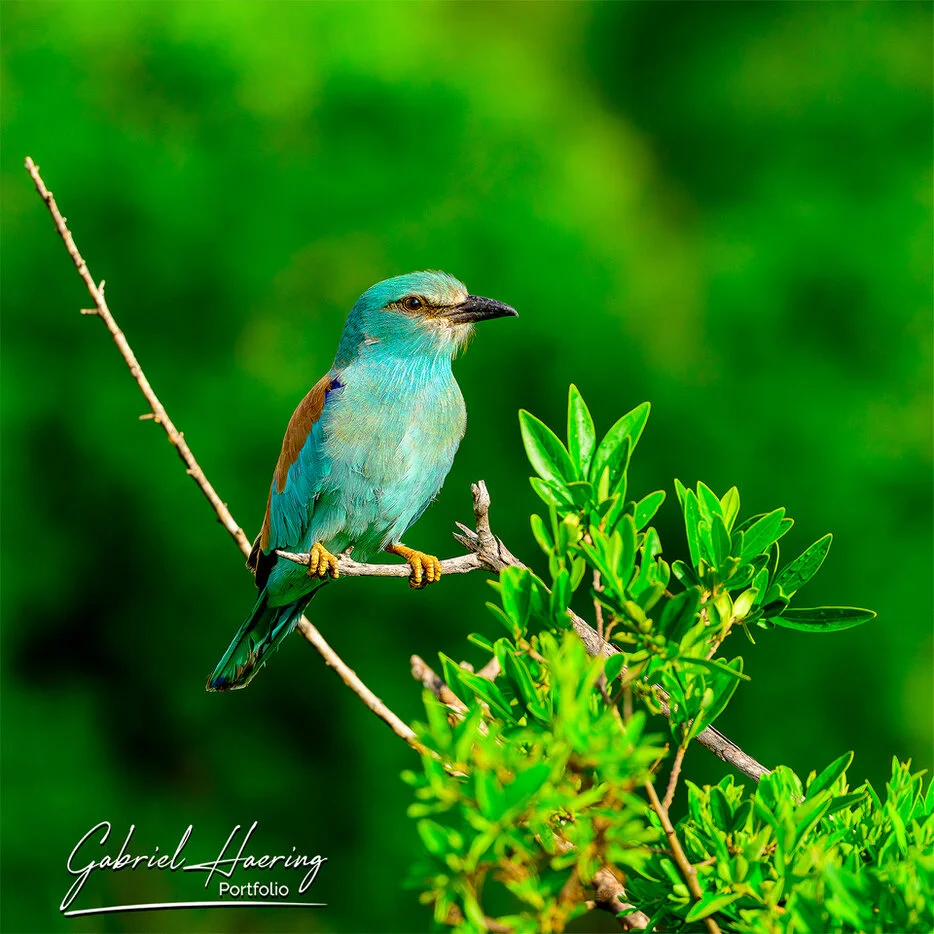
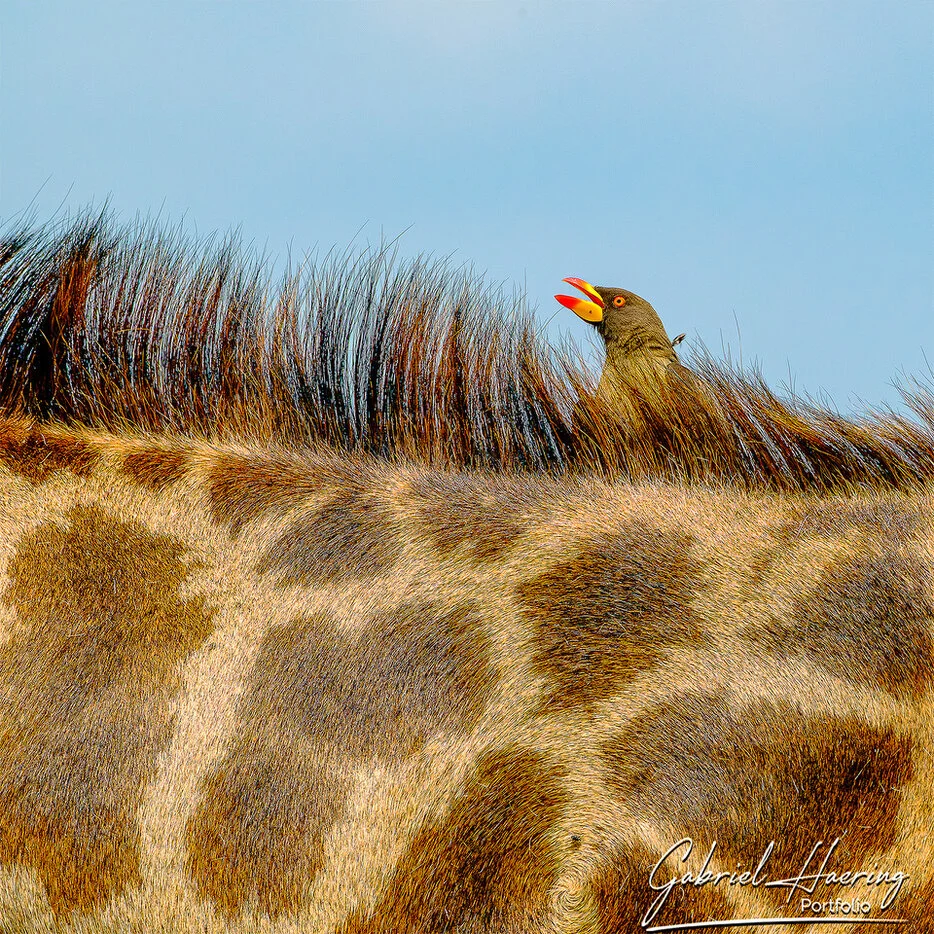
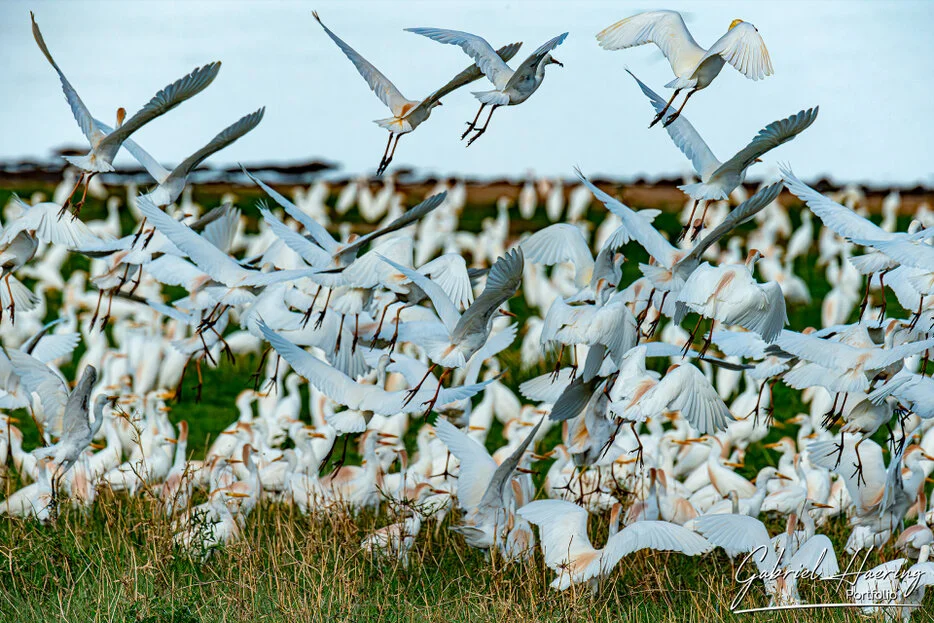
Birdlife is an essential part of Tarangire photography. The park offers strong opportunities for color, gesture and graphic composition: crowned cranes near water, rollers in vivid green surroundings, oxpeckers on mammals, flocks of white birds rising from the ground, and small waders creating delicate circles on the water surface.
These images add rhythm and variety to the portfolio. Birds often bring scale, movement and small visual surprises. They also connect the dry land to the wet places of the park, where water, reeds, reflections and mud create a very different photographic mood from the open savannah.
For photographers, Tarangire’s birdlife is a valuable part of the experience. It invites you to slow down, watch gestures, follow light and look for smaller compositions between the larger wildlife encounters.
Predators and rare moments
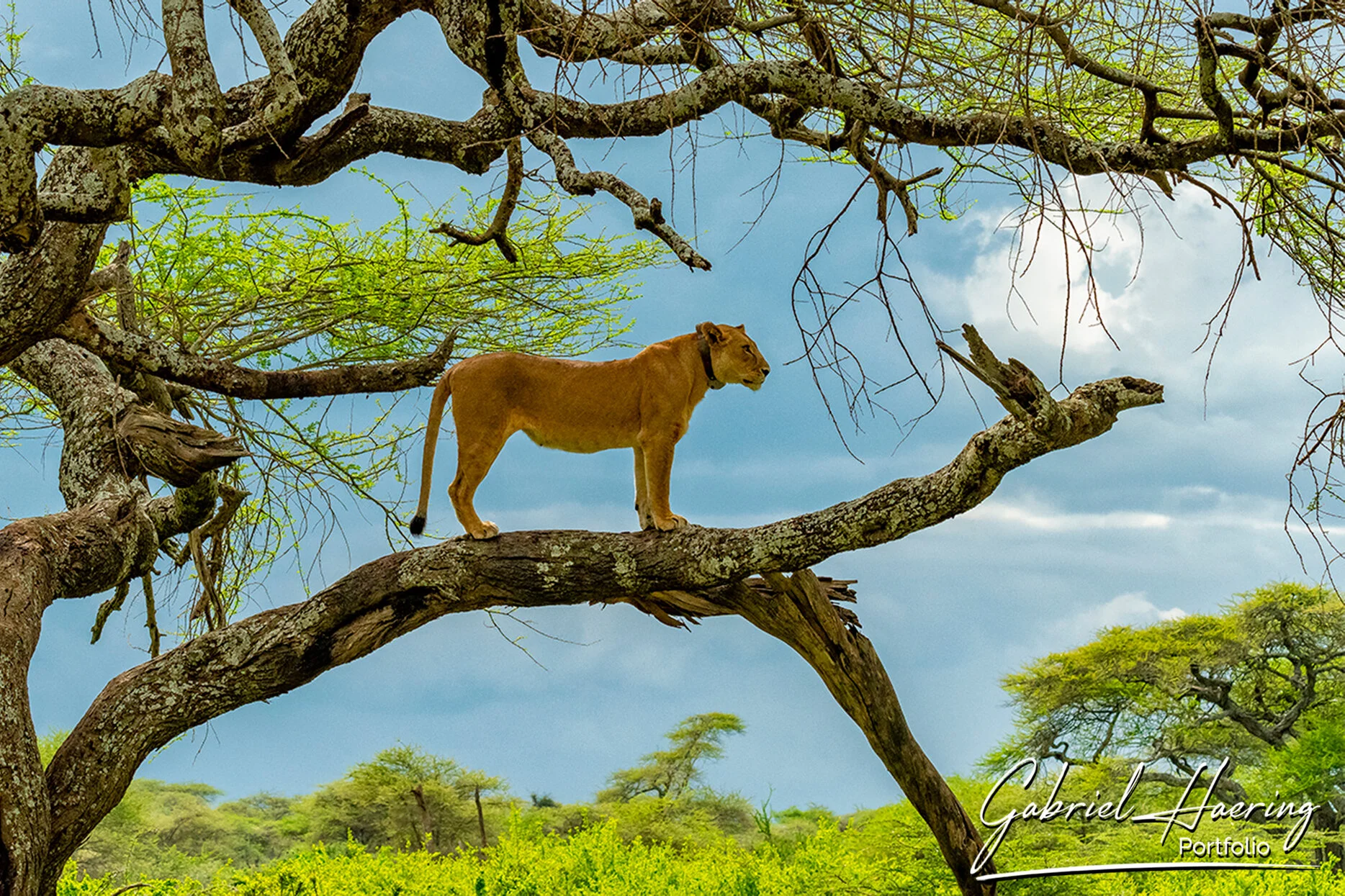
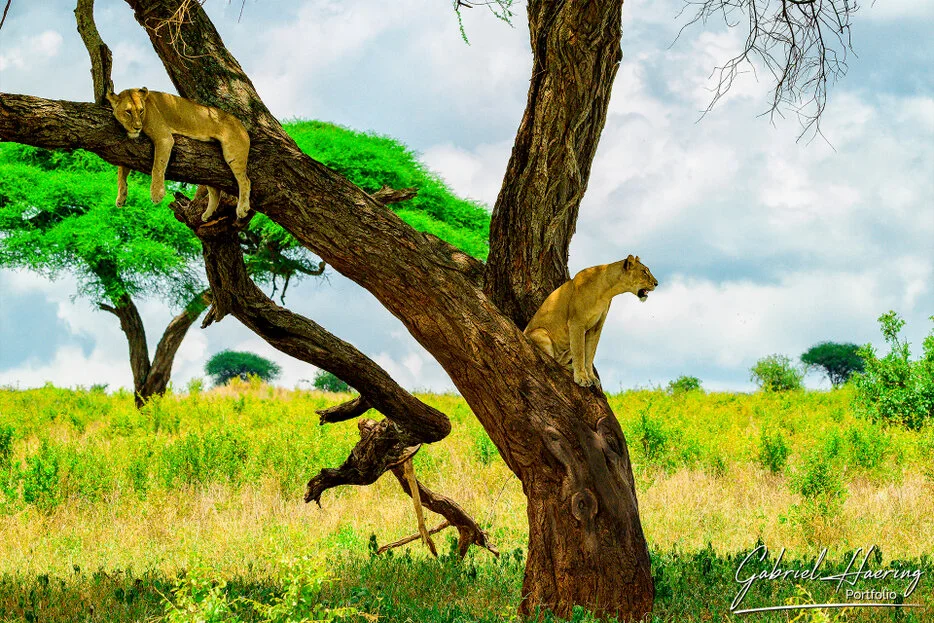
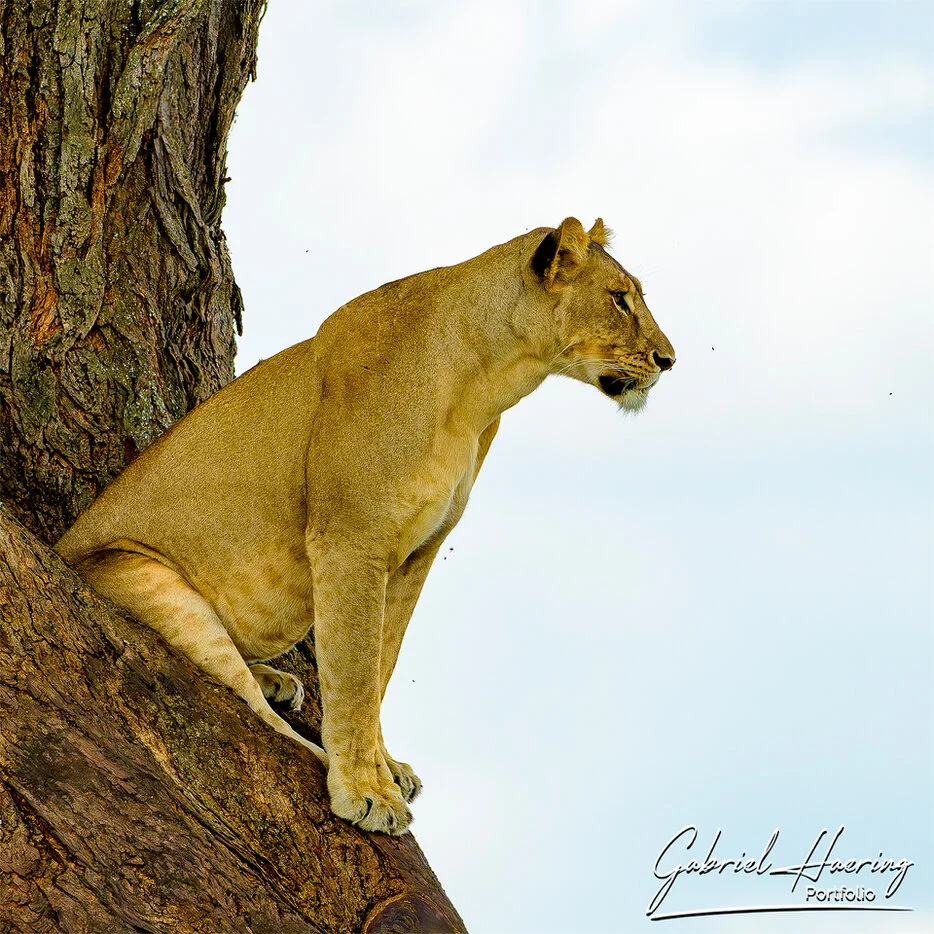
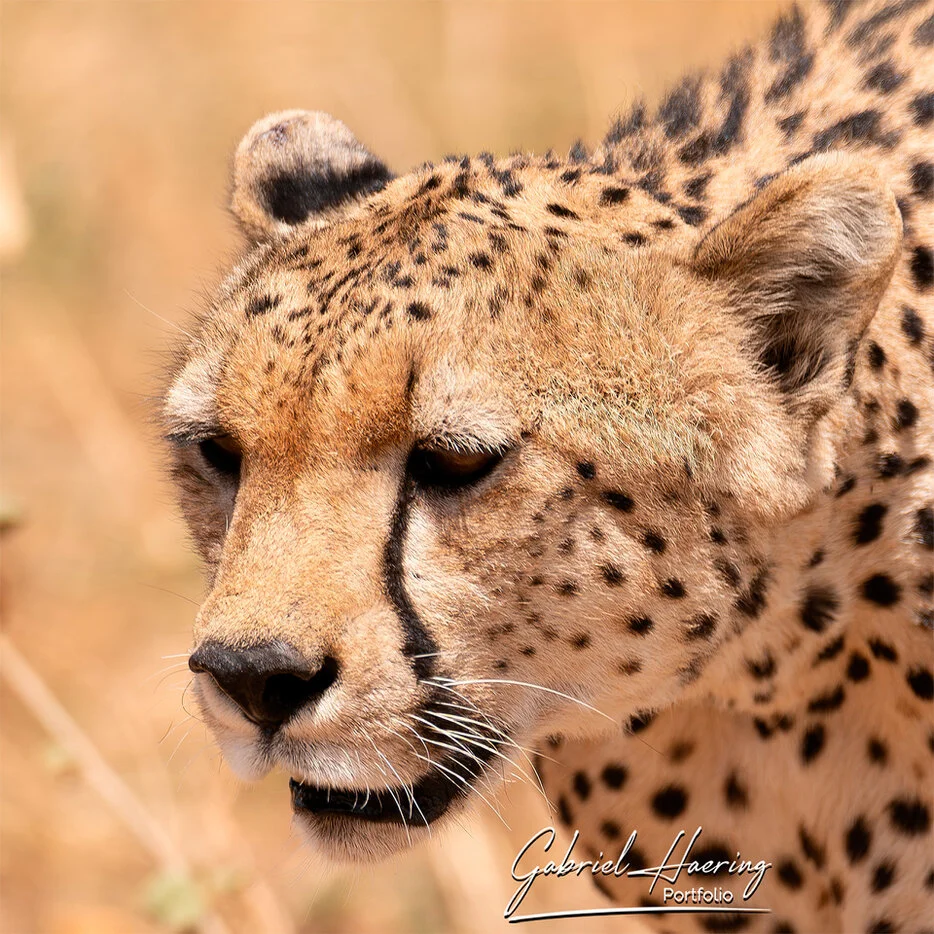
Tarangire is not only about elephants and baobabs. Predators add a different emotional tone to the landscape. Tree-climbing lions, a lioness watching from a branch or a cheetah portrait in warm grass bring stillness, tension and presence to the portfolio.
In these situations, patience is more important than proximity. A predator resting in a tree or looking quietly from the grass can become a strong image when the surrounding space, branches, light and background are allowed to remain part of the frame.
For me, Tarangire wildlife photography becomes strongest when the predator is shown as part of the place: held by branches, softened by grass, framed by warm light or balanced against the surrounding landscape.
Color, contrast and natural atmosphere
This portfolio is rooted in color, but also in restraint. Tarangire can be golden, dusty and dry, but it can also be surprisingly green, especially after rain. That contrast is one of the park’s photographic strengths. Warm earth, grey elephant skin, green river vegetation, blue sky, red dust, pale grass and the dark silhouettes of trees all offer natural color relationships.
I try to keep the compositions clean and the color believable. The strongest Tarangire images are often not the most crowded ones, but the ones where the visual elements are clear: an elephant calf between adults, a giraffe drinking, a bird standing in water, a lion on a branch, or a baobab anchoring the whole scene.
For me, wildlife photography in Tarangire is not about making the park look more dramatic than it is. It is about preserving its real atmosphere: warm, quiet, spacious and unmistakably Tanzanian.
Respect, patience and authentic moments
Every image in this portfolio is made with respect for the animals and for the natural rhythm of Tarangire National Park. I work from designated tracks, follow the guidance of experienced local guides and avoid forcing encounters for the sake of a photograph.
Tarangire rewards patience. Some of the most meaningful images come from waiting: for elephants to align beneath a tree, for a giraffe to lower its head to drink, for birds to lift into the air, for dust to soften the light or for sunset to simplify the landscape into form and color.
This is also the spirit I bring to photographic safaris that include Tarangire. The goal is not to rush from one sighting to the next, but to give the park enough time to reveal its rhythm.
These are the moments I try to preserve: not only what Tarangire looks like, but what it feels like.
Prints, licensing & photo safaris
If an image from this Tarangire portfolio resonates with you, it can often be acquired as a fine art print or licensed for editorial and commercial use through my main sales website.
And if these images make you feel that Tarangire is a place you would like to experience with your own camera, there are two natural ways to include it in a photographic safari.
The first is my January 2027 Great Migration Calving Season photographic safari in Northern Tanzania. This small-group journey starts in Tarangire before continuing to Ngorongoro, Ndutu and Central Serengeti. Tarangire brings elephants, baobabs, birds, giraffes, riverine landscapes and a warm, atmospheric introduction to the route.
The second option is a tailor-made Northern Tanzania photographic safari, where Tarangire can be combined with Lake Natron for a more personal and less conventional journey. This route links two very different photographic worlds: the elephants, baobabs and wildlife of Tarangire with the flamingos, reflections, mineral waters and volcanic landscapes of Lake Natron.
Both approaches are designed around a photographic rhythm: small groups, generous time in the field, careful attention to light, and enough flexibility to work seriously with wildlife behaviour, landscape and composition.
Please mention this Tarangire portfolio when you get in touch, so I can easily identify the photographs or the safari experience you are interested in.