
Namibia is one of the most visually distinctive countries in Africa. Its photographic identity is built on space, silence, mineral color and strong natural design. Few countries offer such a powerful combination of wildlife, desert geology, dune landscapes and minimalist compositions.
This Namibia photography portfolio introduces four complementary visual chapters. Etosha National Park brings wildlife, waterholes, reflections, pale salt-pan backgrounds and dry-season atmosphere. Damaraland offers ancient rocks, dry riverbeds, desert-adapted wildlife, fairy circles, rock engravings and vast geological landscapes. Namib-Naukluft National Park expands the story into red dunes, gravel plains, mountain silhouettes, oryx, fairy circles and open desert light. Deadvlei, in the Sossusvlei region, reduces the desert to one of Africa’s most iconic compositions: black dead trees, white clay, red dunes and blue sky.
Together, these four portfolios show Namibia as a country of contrast: wildlife and emptiness, waterholes and dry riverbeds, living desert animals and ancient dead trees, broad landscapes and precise graphic detail. The result is not only a travel portfolio, but a visual journey through scale, texture, light and silence.
Memorable Photographic Moments in Namibia
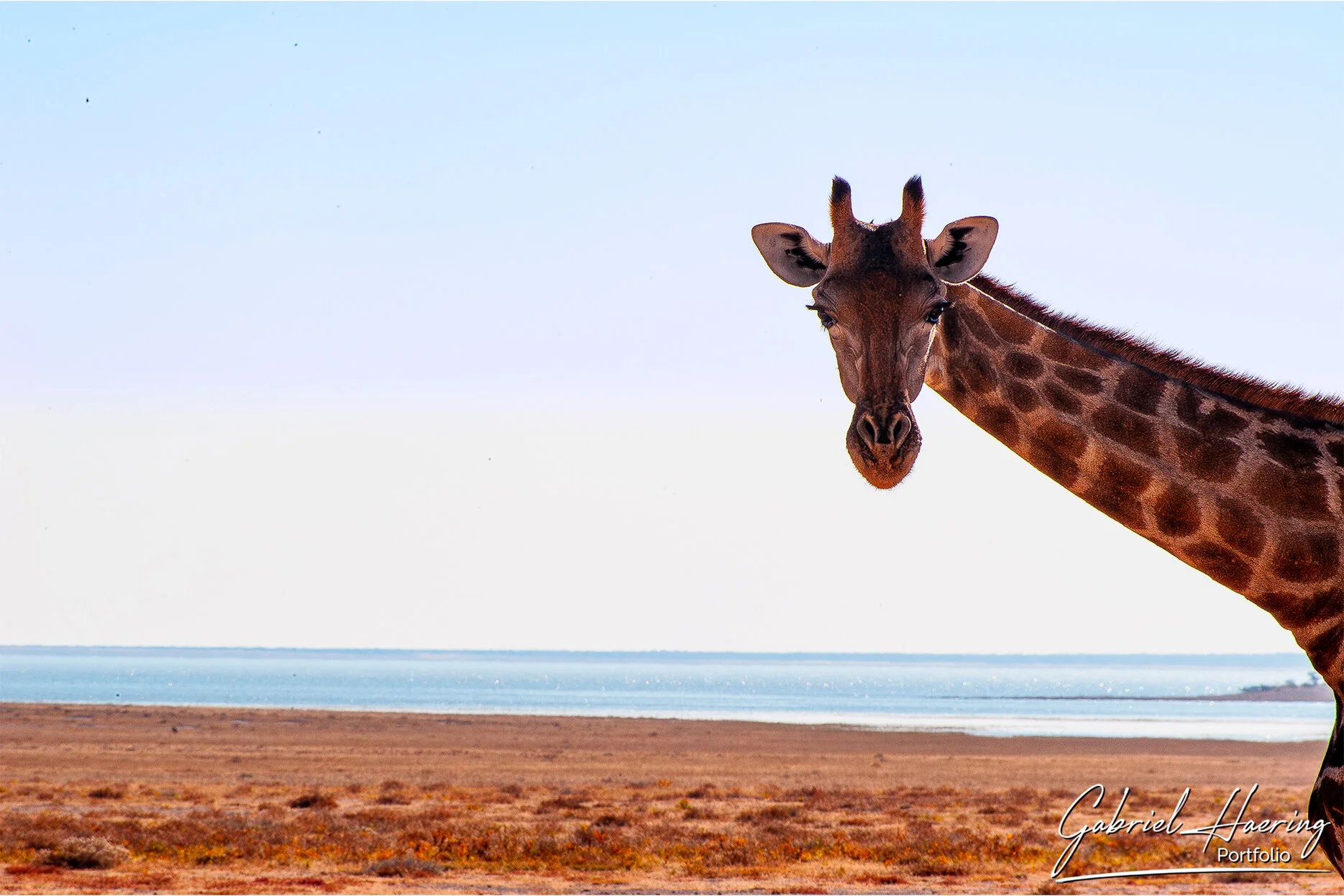
Etosha waterholes at first light
In Etosha, much of the photographic tension happens around water. Animals arrive slowly, often from far across the pale plain, and the scene changes minute by minute. Elephants, zebras, giraffes, antelopes and predators may all use the same waterhole, creating moments where behaviour, spacing and background become the real composition.
The salt pan and pale earth simplify the scene. Reflections, dust and silhouettes add atmosphere, while the open horizon gives the images a strong sense of space.
Desert-adapted life in Damaraland
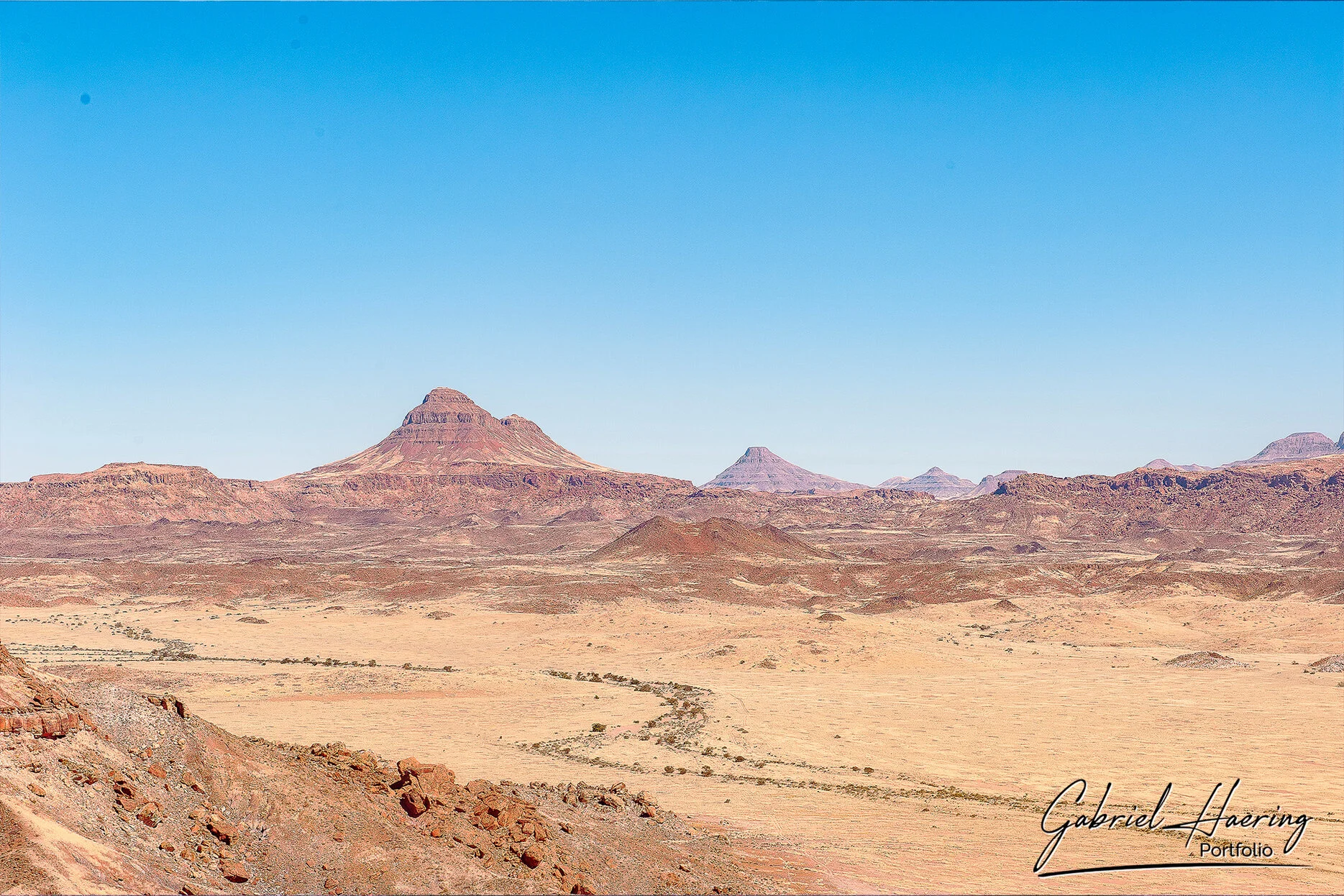
Damaraland is not about dense wildlife. It is about finding life in a harsh, open landscape. A small group of elephants in a dry riverbed, an oryx on a ridge, a desert flower after rare moisture or tracks crossing sand and stone can become powerful images because the surrounding wilderness gives them scale and meaning.
Here, absence is part of the photograph. Space, rock, silence and distance are not empty background; they are central to the emotional strength of the image.
Namib-Naukluft and the scale of the desert
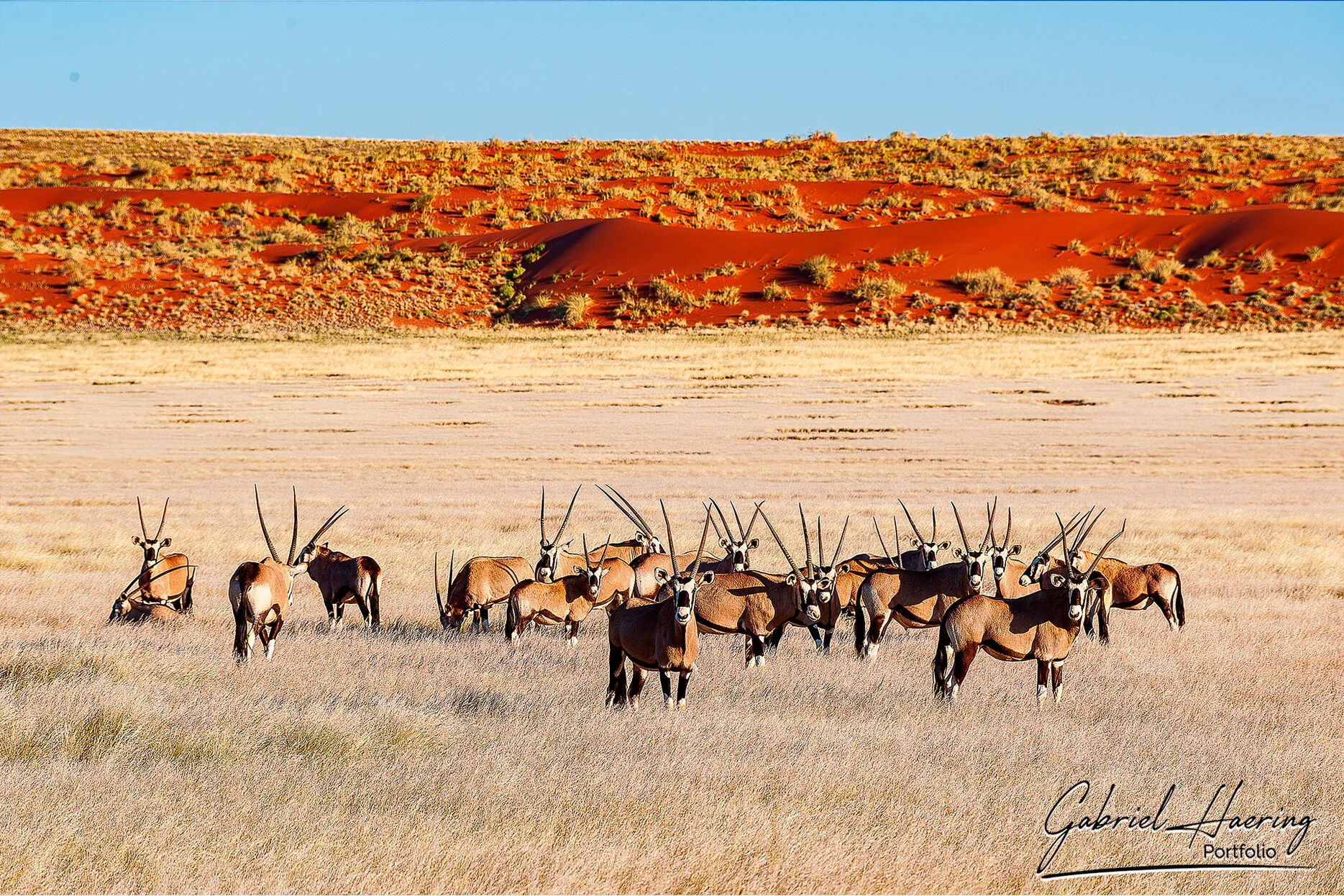
Namib-Naukluft National Park expands the visual language of Namibia beyond a single famous location. Gravel plains, mountain silhouettes, dune fields, dry valleys, desert grasslands and fairy circles create images built on space, texture and atmosphere.
This is a landscape where simplicity matters. One line, one shadow, one animal, one mountain profile or one vast horizon can be enough to express the scale and stillness of the Namib Desert.
Deadvlei and the geometry of silence
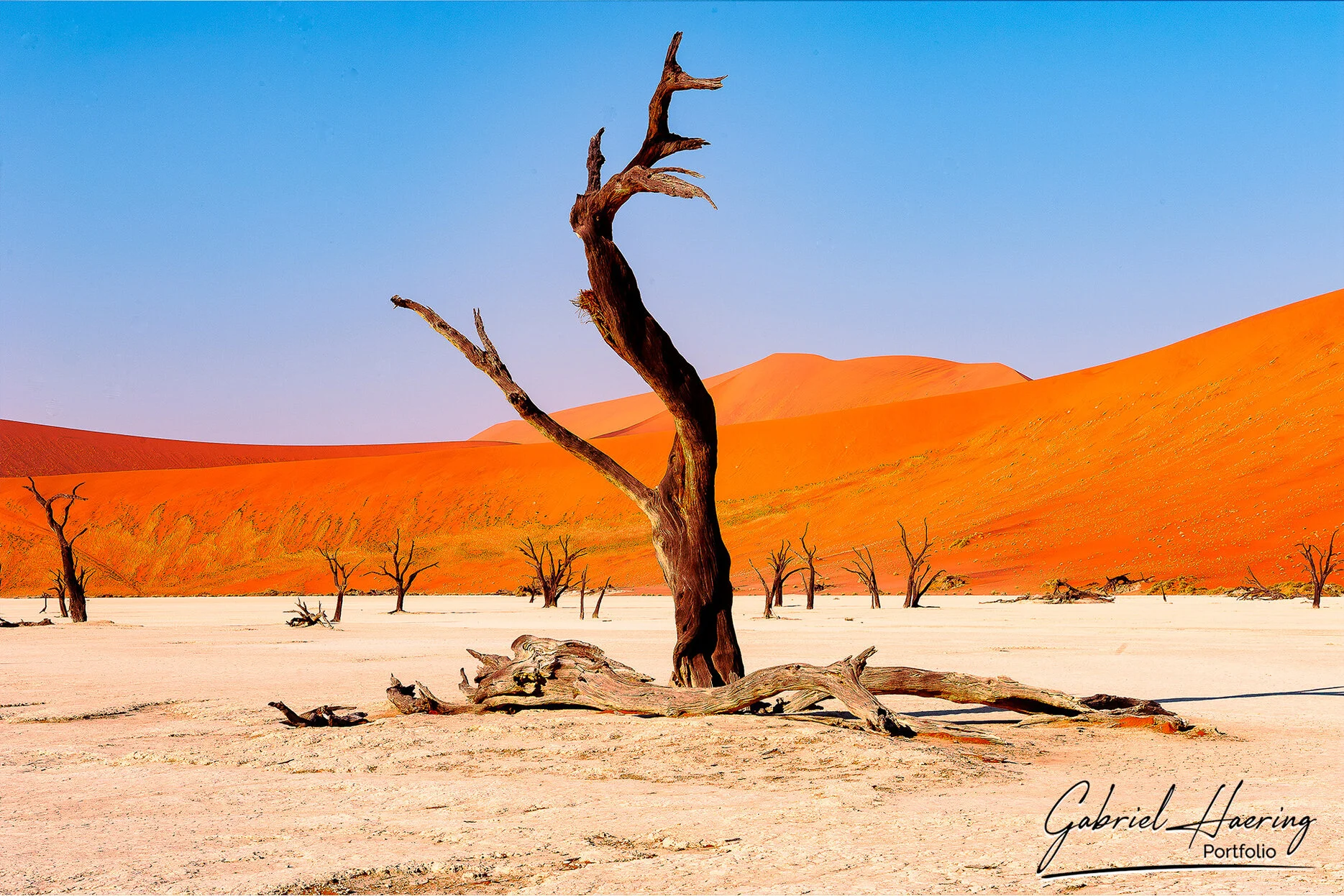
At Deadvlei, the subject is reduced to form: dead camel thorn trees, cracked white clay, red dunes and blue sky. Early morning and late afternoon light are essential, because the low sun transforms the dunes into sculptural forms and creates strong separation between color and shadow.
Deadvlei is not about action. It is about silence, permanence and visual precision. The strongest photographs often come from small changes in position, where a tree, dune line and patch of sky suddenly fall into balance.
Field Notes & Photographic Approach
Working in Namibia means slowing down and reading space carefully. The landscapes are often open and apparently empty, but this is exactly what makes them powerful. Composition depends on distance, horizon placement, negative space, animal position, texture and the quality of light.
In Etosha, I look for clean waterhole scenes, natural behaviour, reflections and the relationship between wildlife and the pale mineral environment. In Damaraland, I often compose wider, allowing desert, rock formations and dry riverbeds to dominate the frame. In Namib-Naukluft, the focus becomes broader: desert scale, mountain layers, dune lines, fairy circles, oryx and the abstract quality of light on dry land. In Deadvlei, the work becomes more precise and graphic, built around the relationship between dead trees, white clay, red dunes and blue sky.
Namibia rewards patience, precision and restraint. Many of the strongest images are not the most dramatic events, but the moments where light, space and subject align naturally.
Prints, Licensing & Safaris Related to Tanzania
If you are interested in acquiring prints from this Namibia portfolio or licensing images for editorial, travel, conservation or commercial use, please visit the dedicated Prints & Licensing page.
A selection of Namibia photographs may be available as fine art prints, including wildlife images from Etosha, desert landscapes from Damaraland, wider desert views from Namib-Naukluft National Park and iconic dune compositions from Deadvlei.