
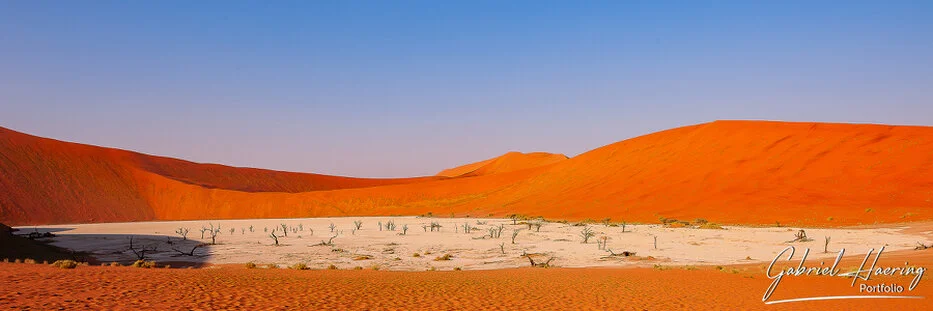
Deadvlei is one of the most extraordinary photographic landscapes in Namibia. Located near Sossusvlei, in the Namib-Naukluft region, it is famous for its dry white clay pan, ancient dead camel thorn trees and the immense red dunes that surround it.
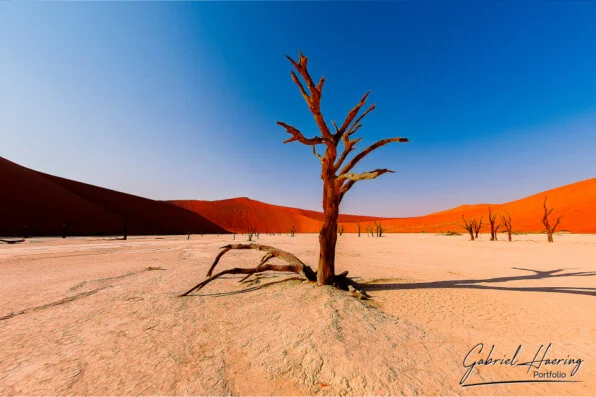
For photography, Deadvlei is almost perfect in its simplicity. The scene is built from only a few elements: black trees, pale ground, orange dunes and deep blue sky. This natural separation of color and form creates images that feel graphic, timeless and almost unreal.
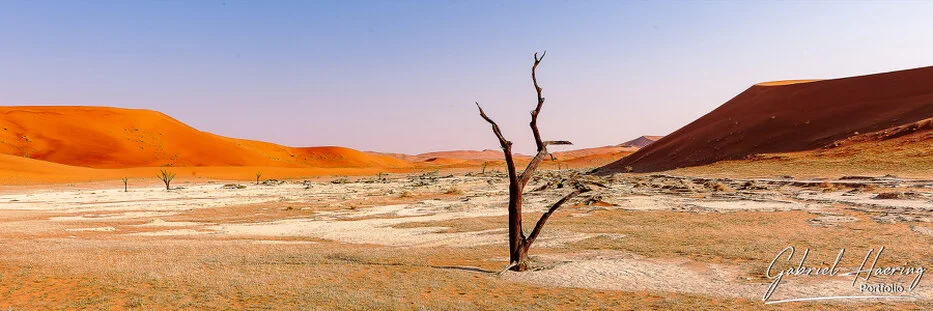
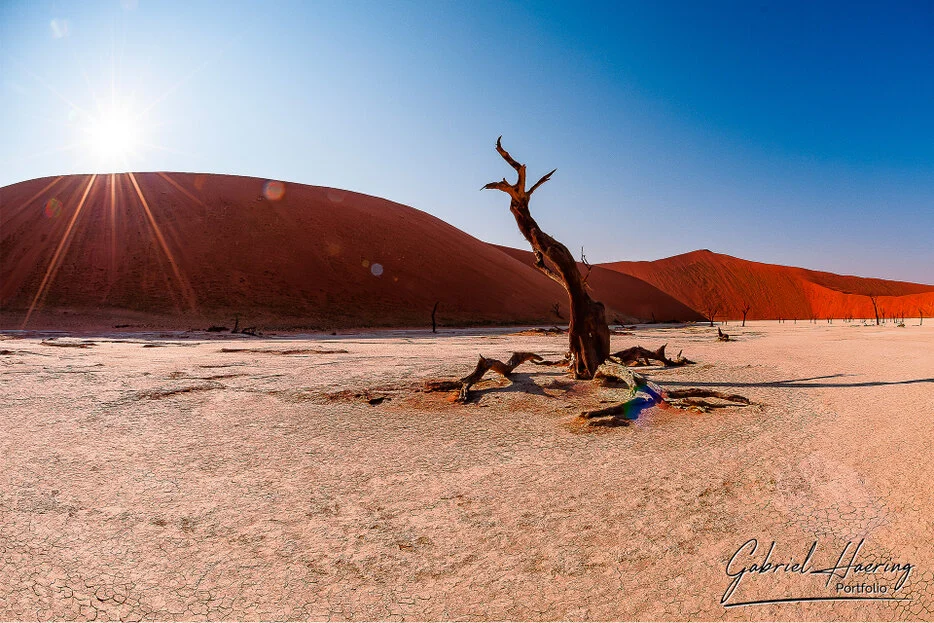
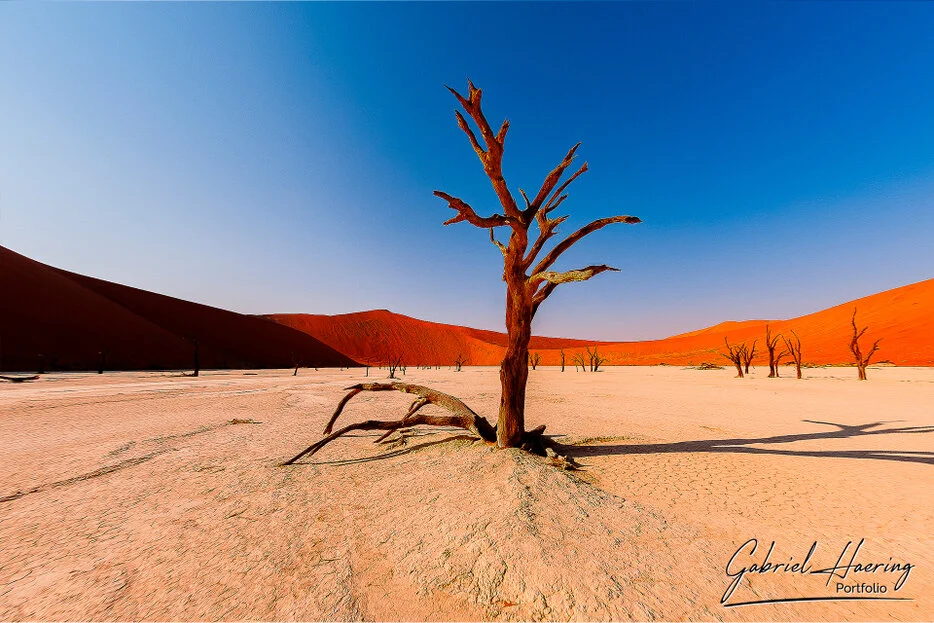
The dead trees are the soul of Deadvlei. They no longer live, but they still stand with extraordinary presence. Their twisted branches create sculptural shapes against the empty desert, giving each composition a sense of character, silence and permanence.
Sossusvlei provides the wider desert context, but Deadvlei offers the strongest visual identity. It is not only a famous place in Namibia; it is one of the great natural stages for minimalist landscape photography in Africa.
Deadvlei photo gallery – dead trees, clay pan and red dunes
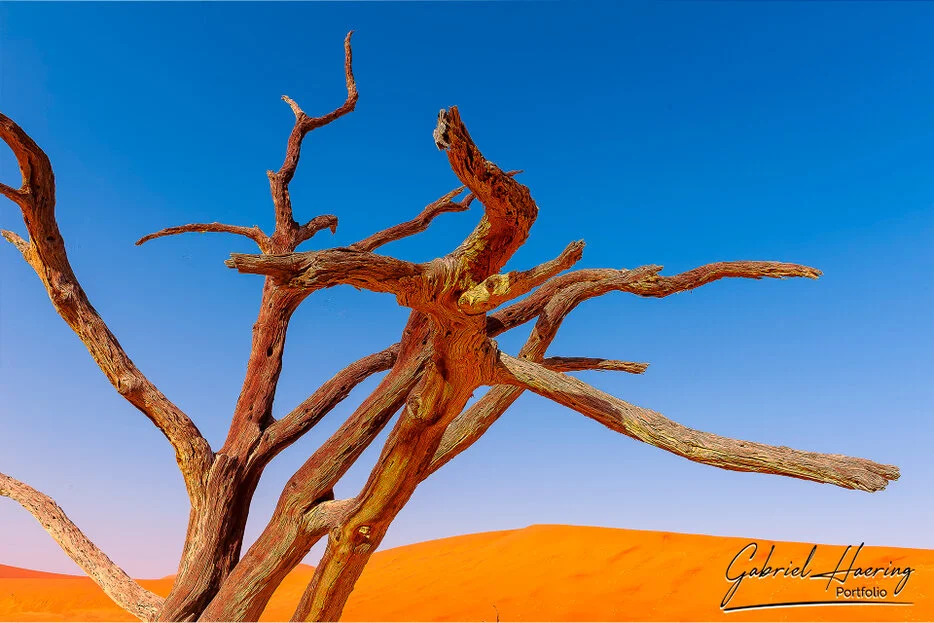
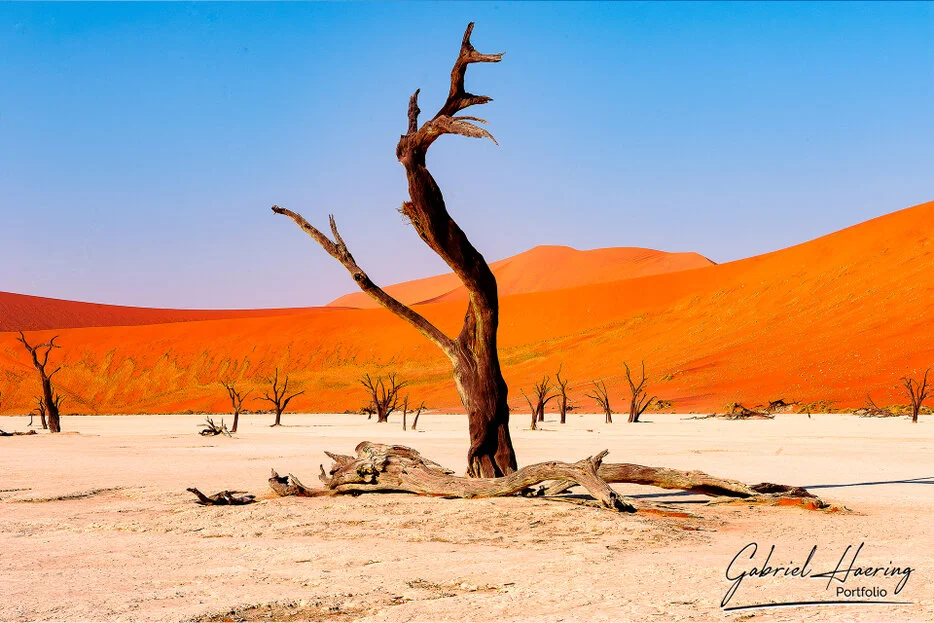
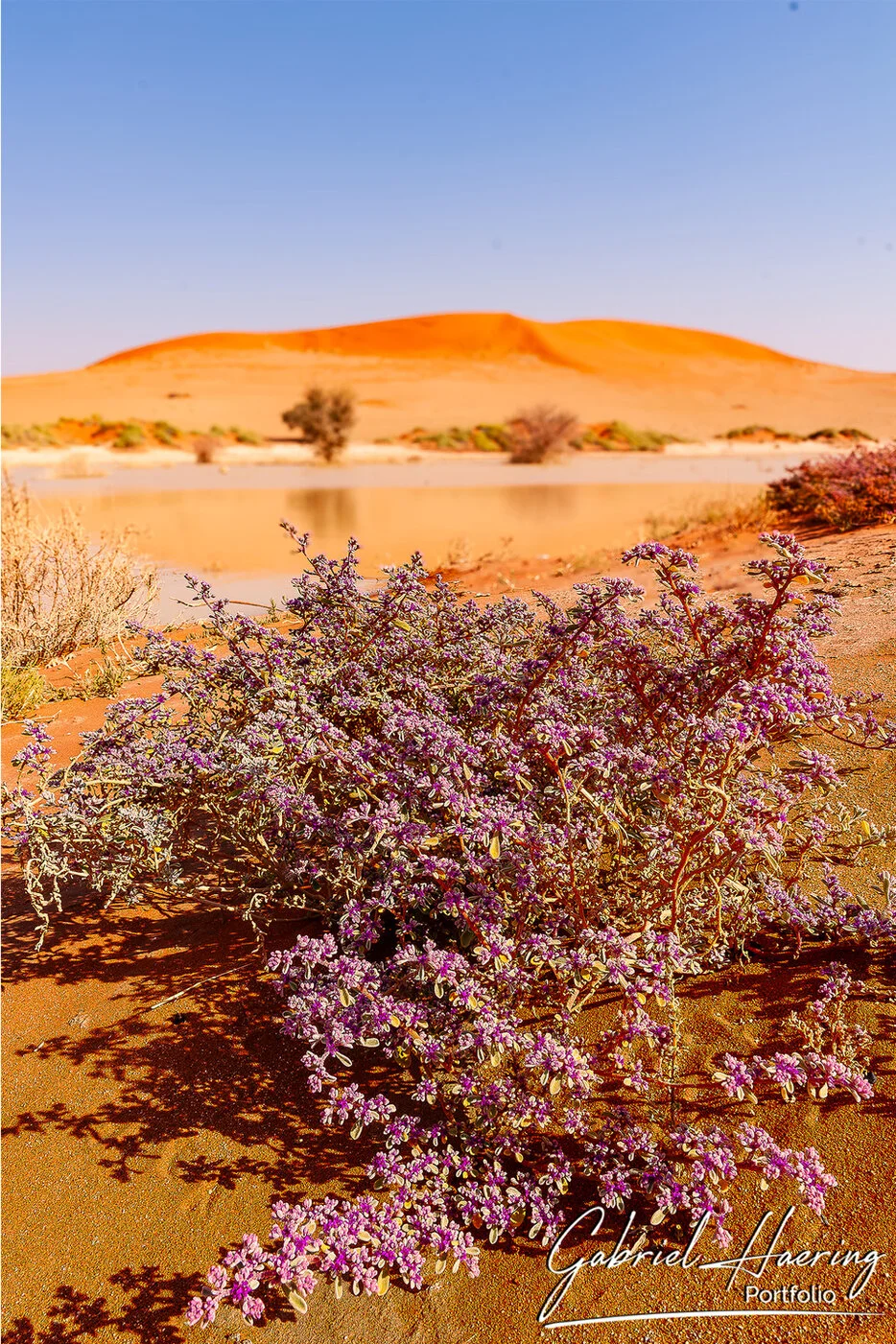
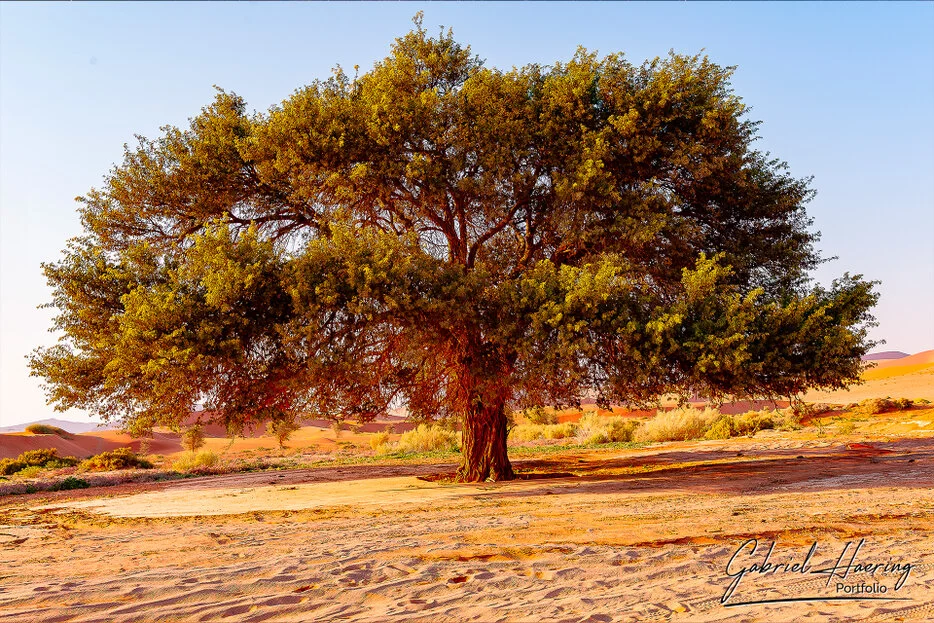
Photographic approach in Deadvlei
Working with dead trees and desert geometry
Deadvlei is a place where photography becomes a search for balance. Every tree has its own shape, direction and personality. Some stand isolated on the clay pan, while others interact visually with the dunes behind them.
The strongest compositions often come from careful positioning. A small step to the left or right can completely change the relationship between a dead tree, the dune line and the sky. In Deadvlei, photography is slow and precise. The subject does not move, but the light changes quickly.
The graphic power of black, white, orange and blue
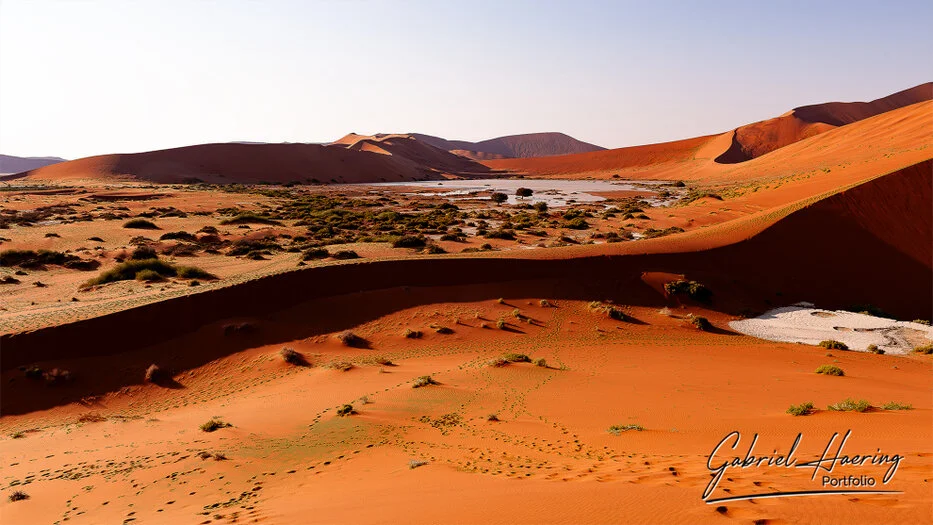
The visual language of Deadvlei is built on contrast. The blackened camel thorn trees stand against the white clay pan, while the red-orange dunes rise behind them with strong curves and shadows. Above everything, the blue sky gives the image its final layer of color.
This limited palette makes Deadvlei ideal for clean, powerful compositions. The landscape naturally removes distraction. The challenge is not to add complexity, but to preserve the purity of the scene.
The dunes as background and structure
Although Deadvlei is defined by its dead trees, the dunes are essential to the image. They create the background, the rhythm and the sense of scale. Their curved ridges and changing shadows frame the trees and give depth to the otherwise flat clay pan.
In early or late light, the dunes become more sculptural. Their colors move from deep red to orange, gold and brown. This changing light can completely transform the mood of the same tree and the same composition.
Silence, time and stillness
Deadvlei is not a landscape of movement. Its power comes from stillness. The dry pan, the dead trees and the surrounding dunes suggest time on a scale much larger than human presence.
The photographs in this portfolio try to express that feeling: silence, heat, dryness, distance and permanence. Deadvlei is spectacular, but it is also contemplative. It invites the photographer to slow down and work with very few elements.
Respecting a fragile desert icon
Deadvlei is visually strong, but also fragile. The dead camel thorn trees are part of the identity of the place and should never be touched, climbed or used as props. The white clay surface and the surrounding desert environment also deserve careful respect.
The best photographic approach is patient and discreet: walk carefully, observe the light, avoid unnecessary disturbance and let the landscape speak through its own shapes and contrasts.
Prints, licensing & photo safaris
If an image from this Deadvlei photography portfolio resonates with you, it can often be acquired as a fine art print or licensed for editorial and commercial use through my main sales website.
Please mention this Deadvlei – Sossusvlei Namibia portfolio when you get in touch, so I can easily identify the photographs you are interested in.