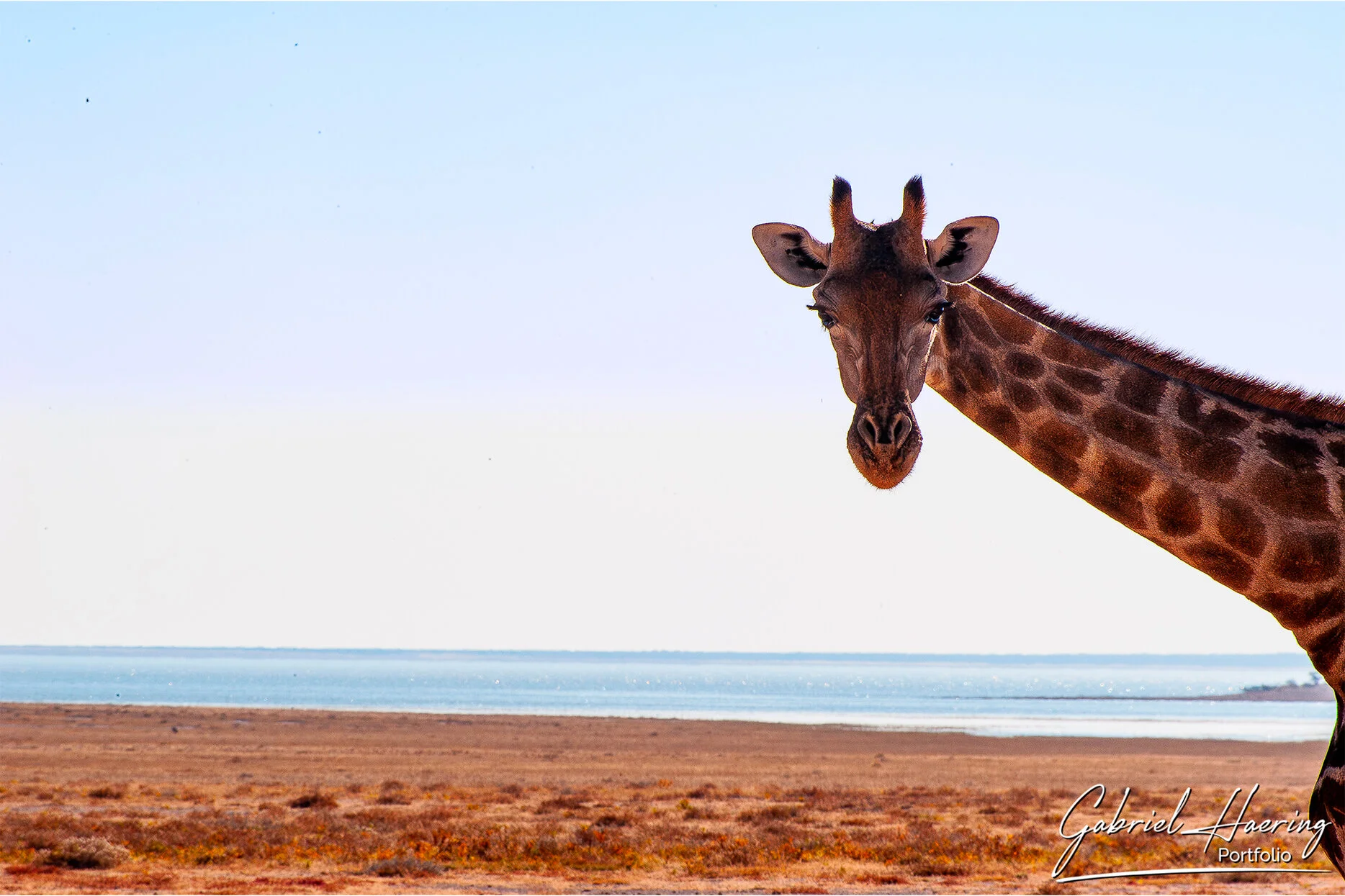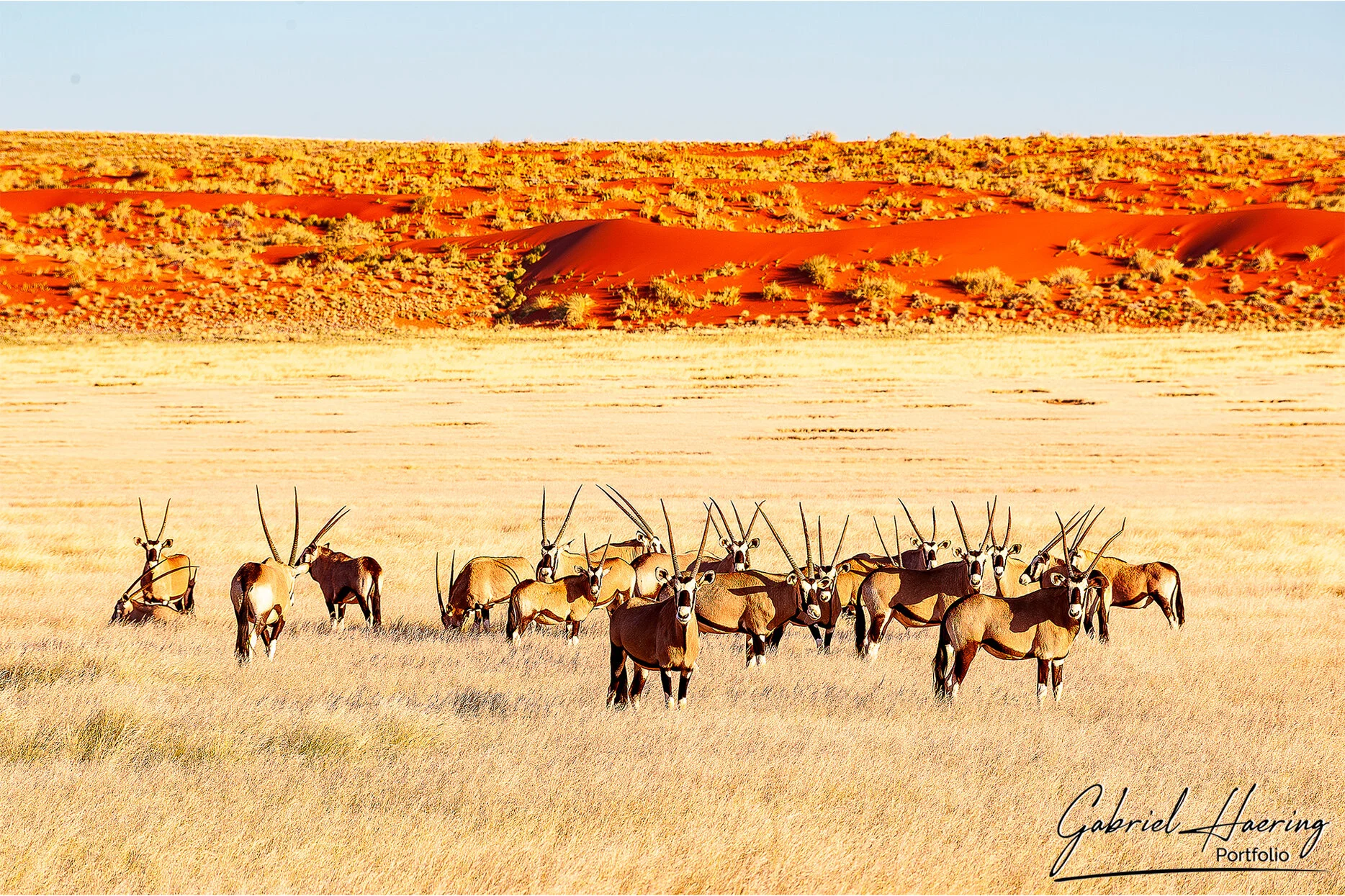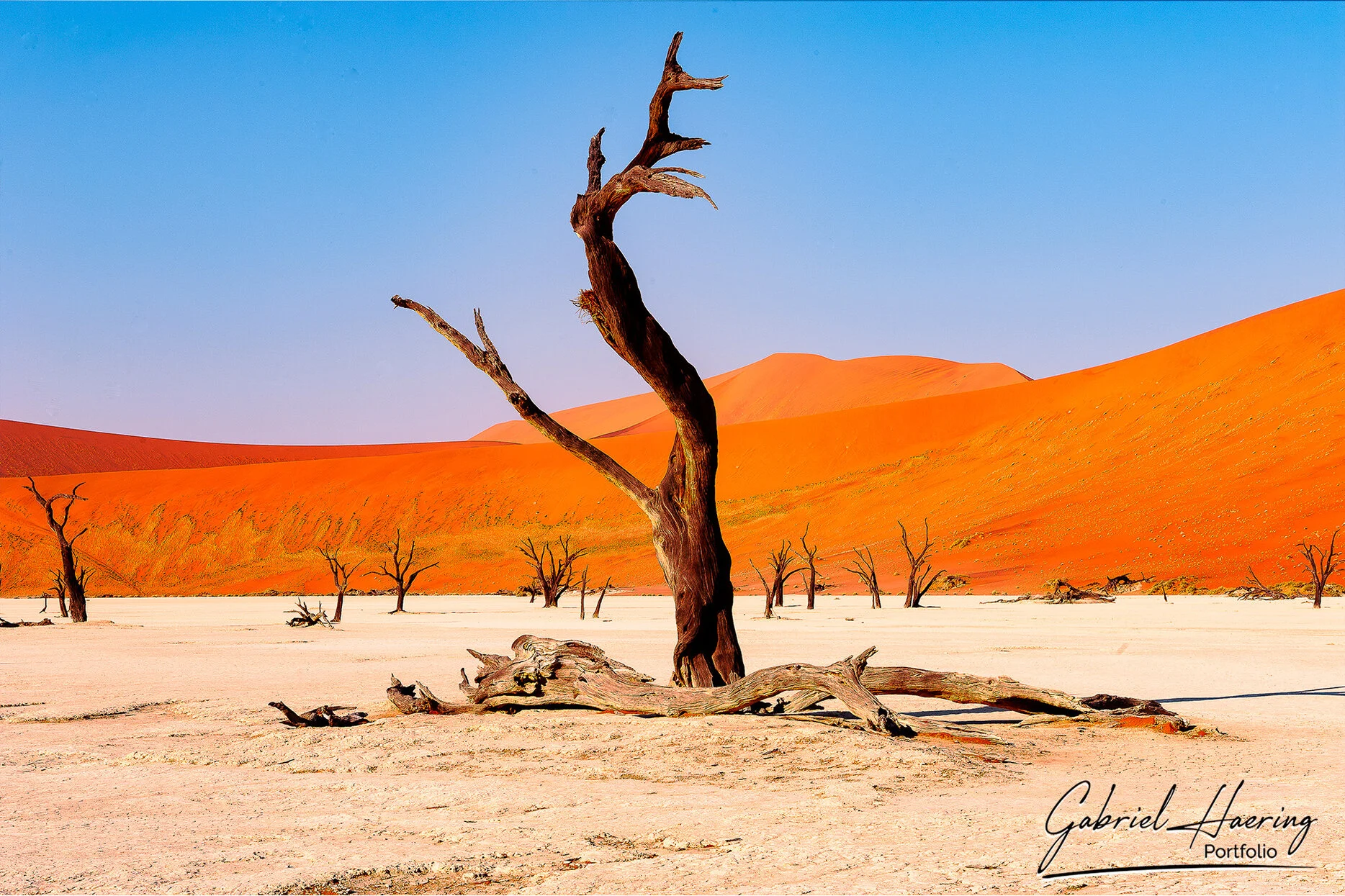

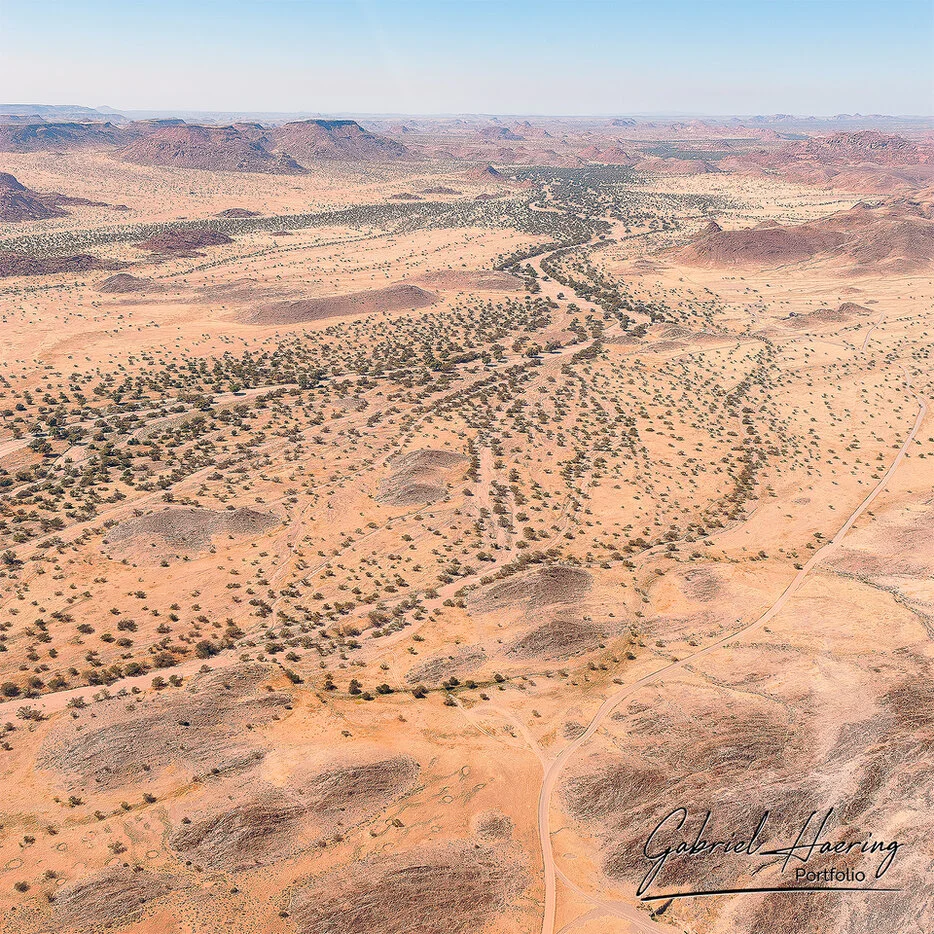
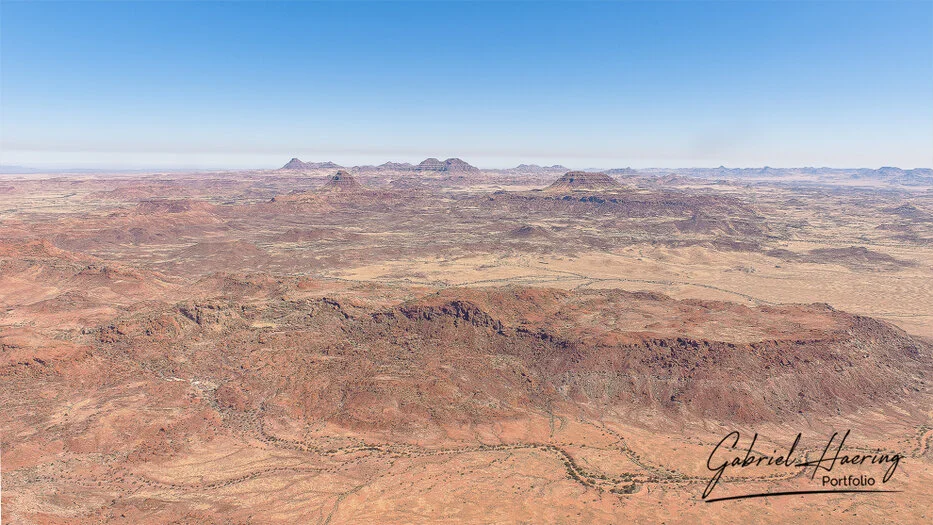
Damaraland is one of Namibia’s most distinctive photographic regions. It is a land of stone, dust, silence and light, where desert plains meet ancient mountains and dry riverbeds cut through a vast, arid landscape.
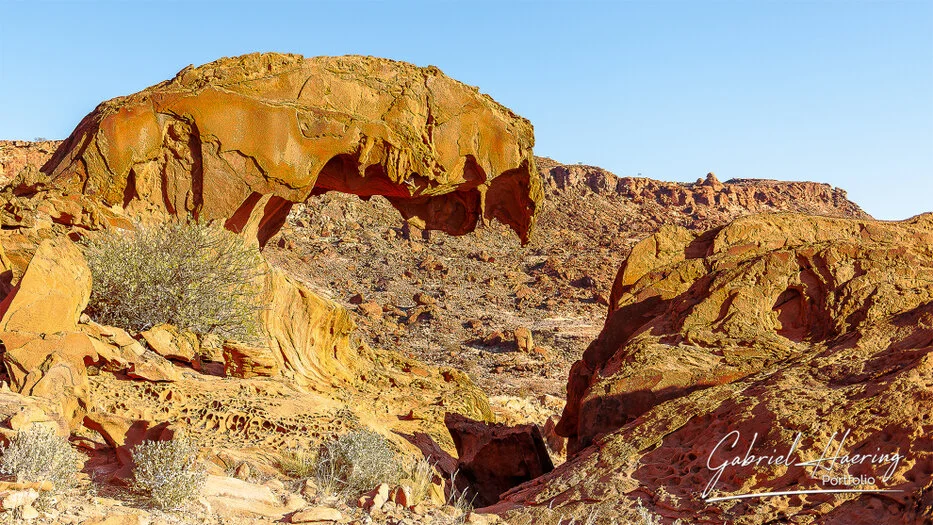
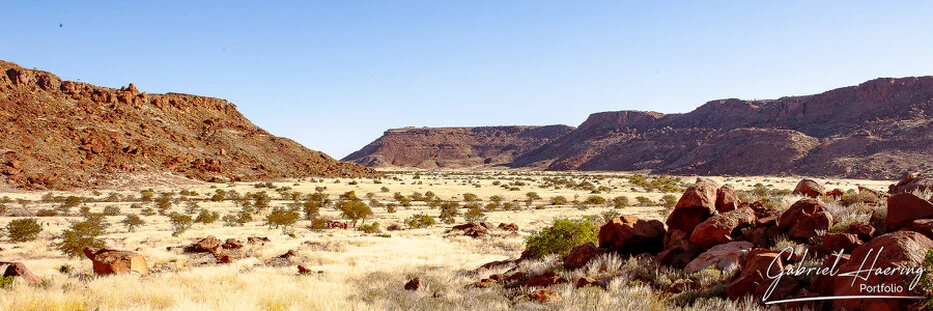
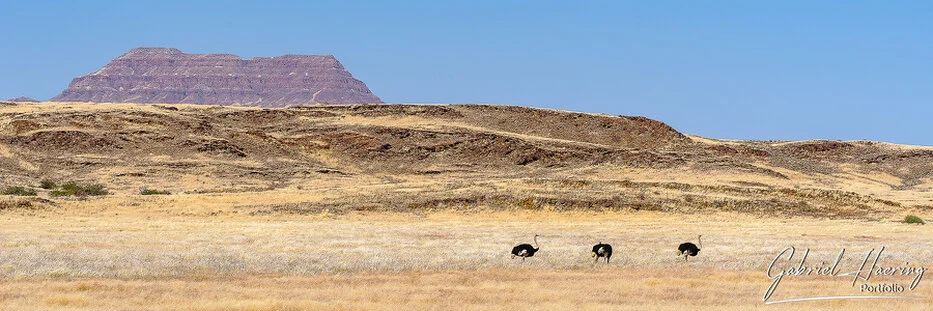
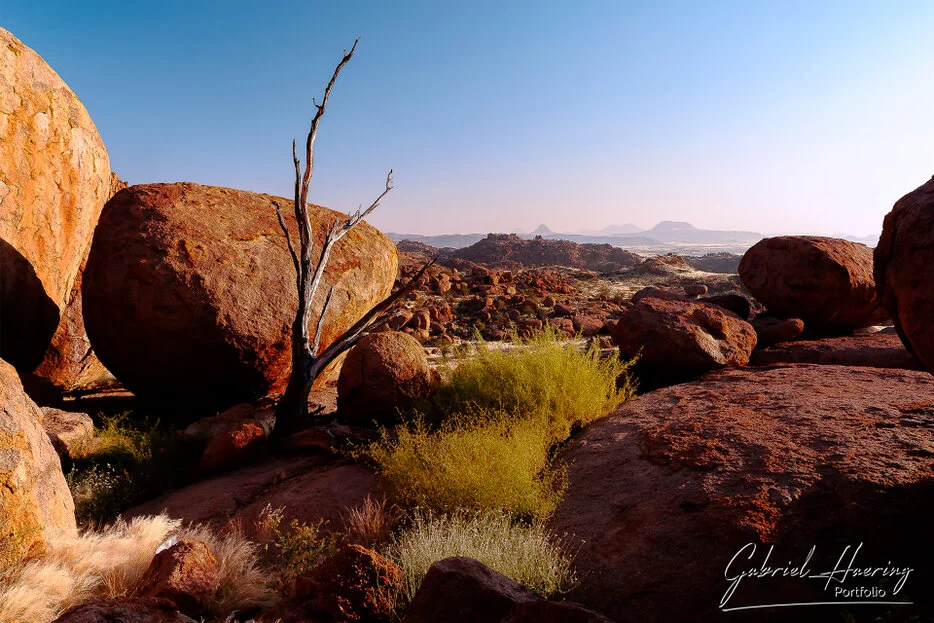
Unlike the dune-dominated scenery around Sossusvlei or the wildlife waterholes of Etosha, Damaraland offers a different visual language: red rock, granite boulders, open valleys, distant mesas, sparse vegetation, prehistoric engravings, desert flowers, animal tracks in sand and the quiet presence of wildlife adapted to an extremely dry environment.
This portfolio gathers images made in that atmosphere: landscapes shaped by geology, details of desert life, traces of elephants, ancient rock engravings, flowering plants after rare moisture, wide horizons and the Milky Way rising above Namibia’s stone desert.
Damaraland is not a place of visual abundance in the usual sense. Its beauty is slower, more mineral and more contemplative. For photography, this makes it especially powerful. The space between subjects becomes part of the image, and the silence of the landscape often carries as much meaning as the subject itself.
Damaraland image gallery
Photographic approach in Damaraland
Stone, distance and desert light
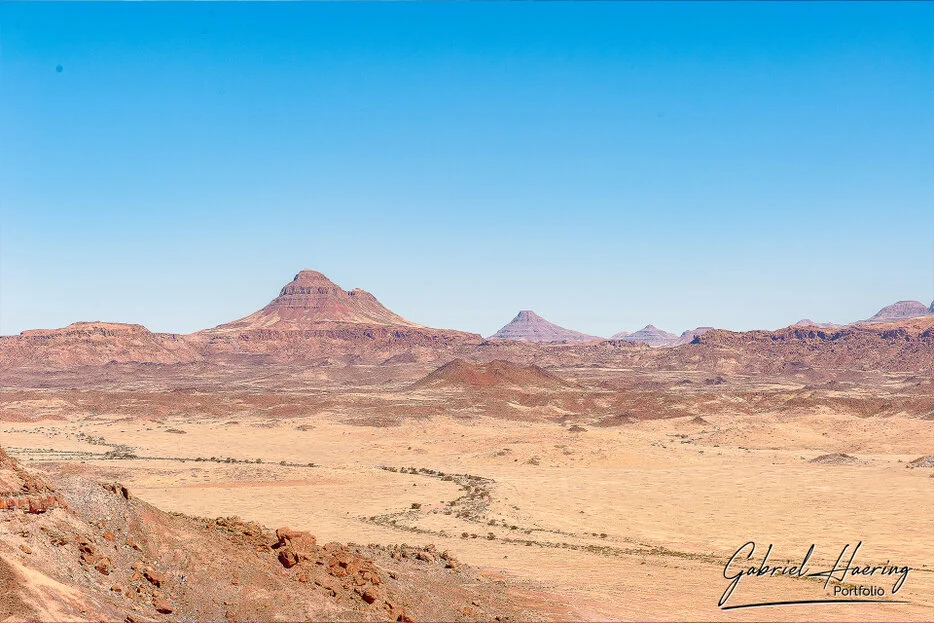
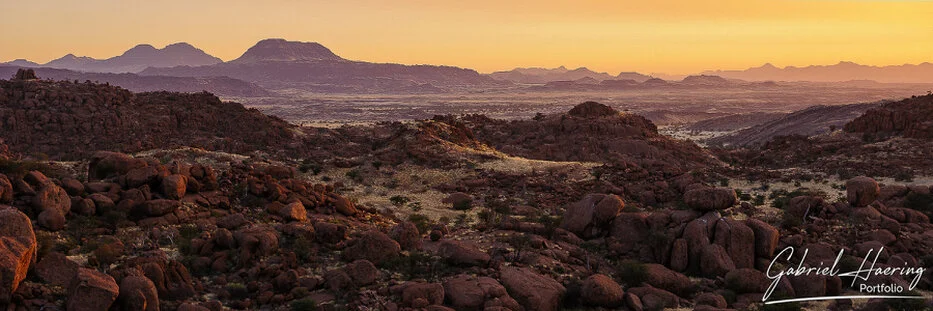
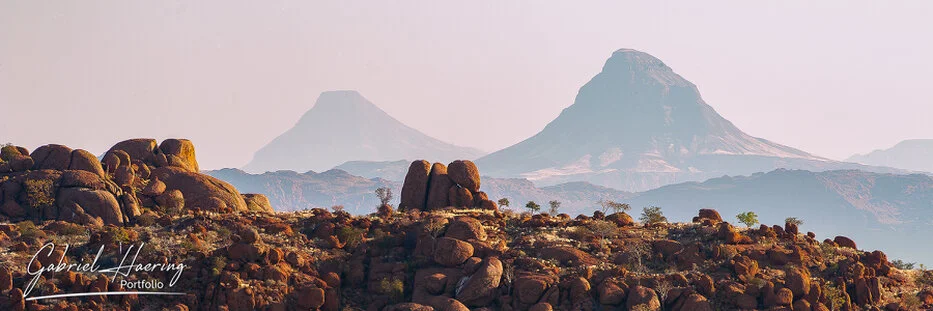
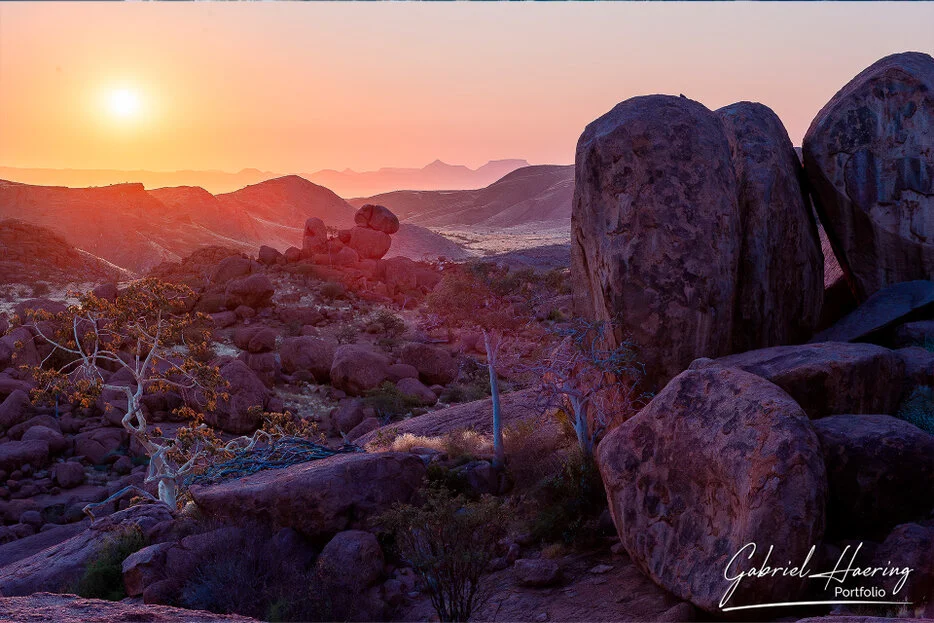
Damaraland is a landscape of structure. The eye is constantly drawn to ridges, valleys, boulders, mesas and dry river courses. The geology gives the images a strong graphic foundation, while the changing light adds warmth, depth and atmosphere.
Early morning and late afternoon are especially important here. The low sun reveals textures in the rock, separates mountain layers and turns the desert into a palette of ochre, copper, pale gold and blue shadow. In such conditions, even a simple line of stones or a distant ridge can become a strong composition.
Desert-adapted wildlife
Damaraland is famous for wildlife that has learned to survive in very dry conditions, especially desert-adapted elephants and free-roaming desert species. These animals are not photographed in lush surroundings or dense bush. They belong to open space, dry riverbeds, dust, heat and distance.
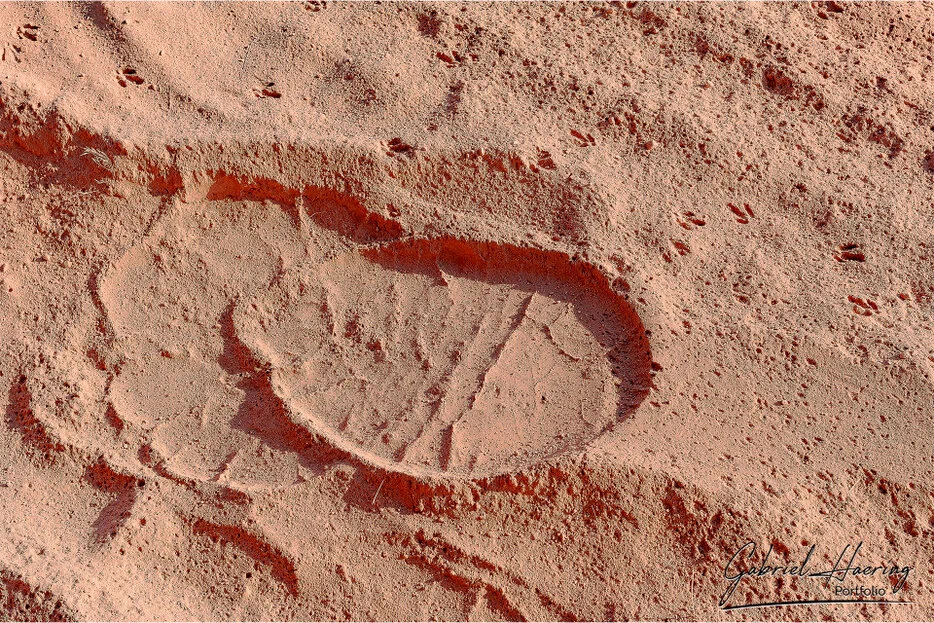
A footprint in sand can sometimes tell as much as the animal itself. It speaks of movement, survival and the hidden life of the desert. In Damaraland, wildlife photography is often about patience and signs: tracks, broken branches, dry valleys and the sudden appearance of life in a landscape that first seems empty.
Twyfelfontein and the memory of the land
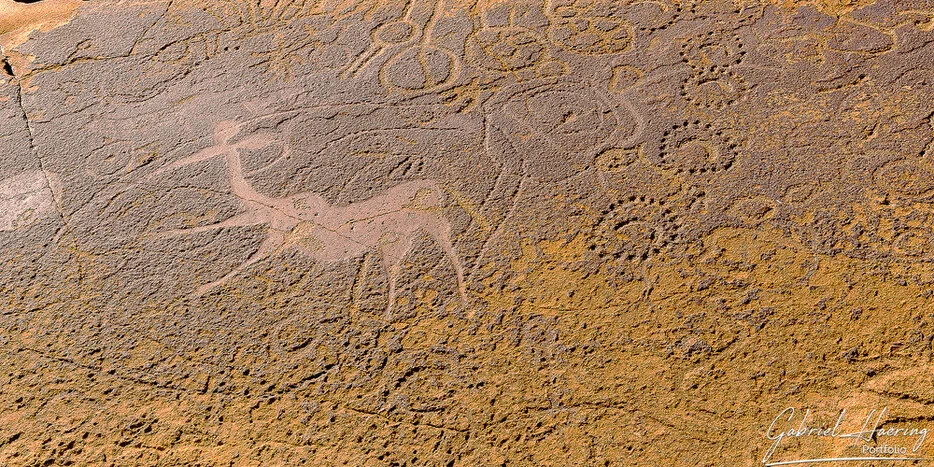
Damaraland is also a place of human history. Twyfelfontein, one of Namibia’s most important rock art sites, preserves ancient engravings created by San hunter-gatherer communities long before modern travel reached this region. UNESCO recognizes Twyfelfontein as an authentic and important record of ritual and symbolic practices connected to the landscape.
For a photographer, these engravings are not only archaeological subjects. They are visual reminders that this desert has always been read, crossed and interpreted by people. Animals, tracks and signs engraved into stone echo the same themes that still define Damaraland today: movement, survival, water, distance and the relationship between life and landscape.
The fairy circles of Namibia
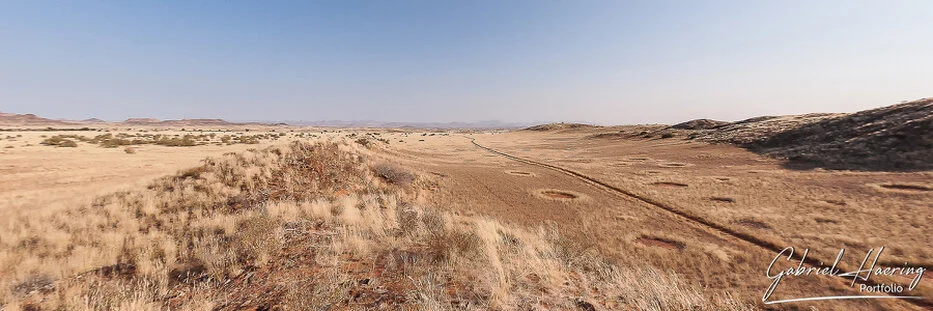
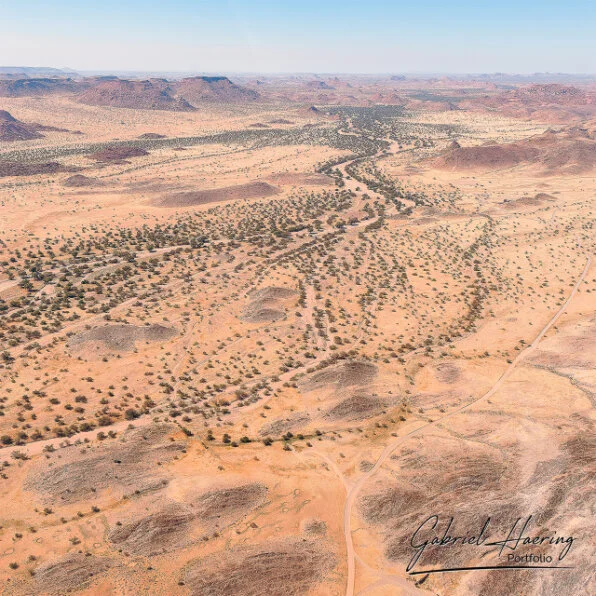
One of Namibia’s most mysterious natural patterns is the fairy circle: a round, bare patch of ground often surrounded by desert grass. From above, these circles form a strange and beautiful rhythm across the landscape, almost like a hidden geometry written into the desert.
For many years, fairy circles have inspired stories and scientific debate. Their origin is still discussed, with two main explanations often considered: termite activity and vegetation self-organization caused by competition for scarce water in arid grasslands. Recent scientific reviews describe the debate as still active, although many studies strongly support plant self-organization as a key mechanism.
For photography, the scientific explanation is only part of the story. Fairy circles are visually powerful because they transform the desert floor into an abstract composition. They remind us that even in dry, apparently empty places, nature creates patterns, tension and order. From the ground they may seem modest; from the air or from an elevated viewpoint they become one of Namibia’s most poetic desert signatures.
Photographic approach in Damaraland
Desert flowers and fragile details
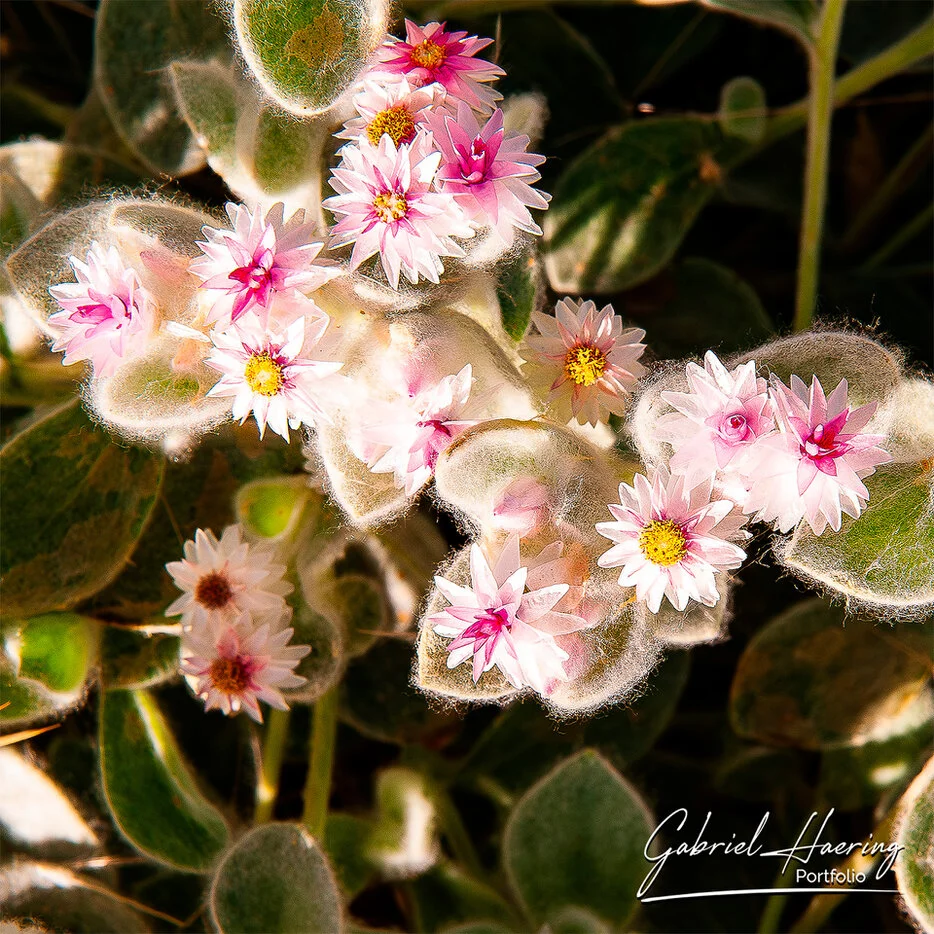
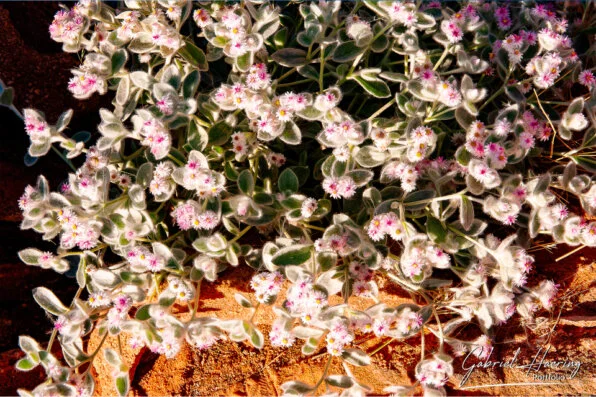
Damaraland is often perceived as harsh and dry, but it also contains fragile details. After moisture, desert plants can flower with surprising delicacy. Small blossoms, pale leaves and soft textures create a strong contrast with the surrounding stone and sand.
These intimate subjects are important because they change the rhythm of the portfolio. They move the eye from vast horizons to small forms, from geology to biology, from scale to detail. In a desert portfolio, such images help show that the landscape is not empty. It is alive, but often in quiet and temporary ways.
Night skies above the stone desert
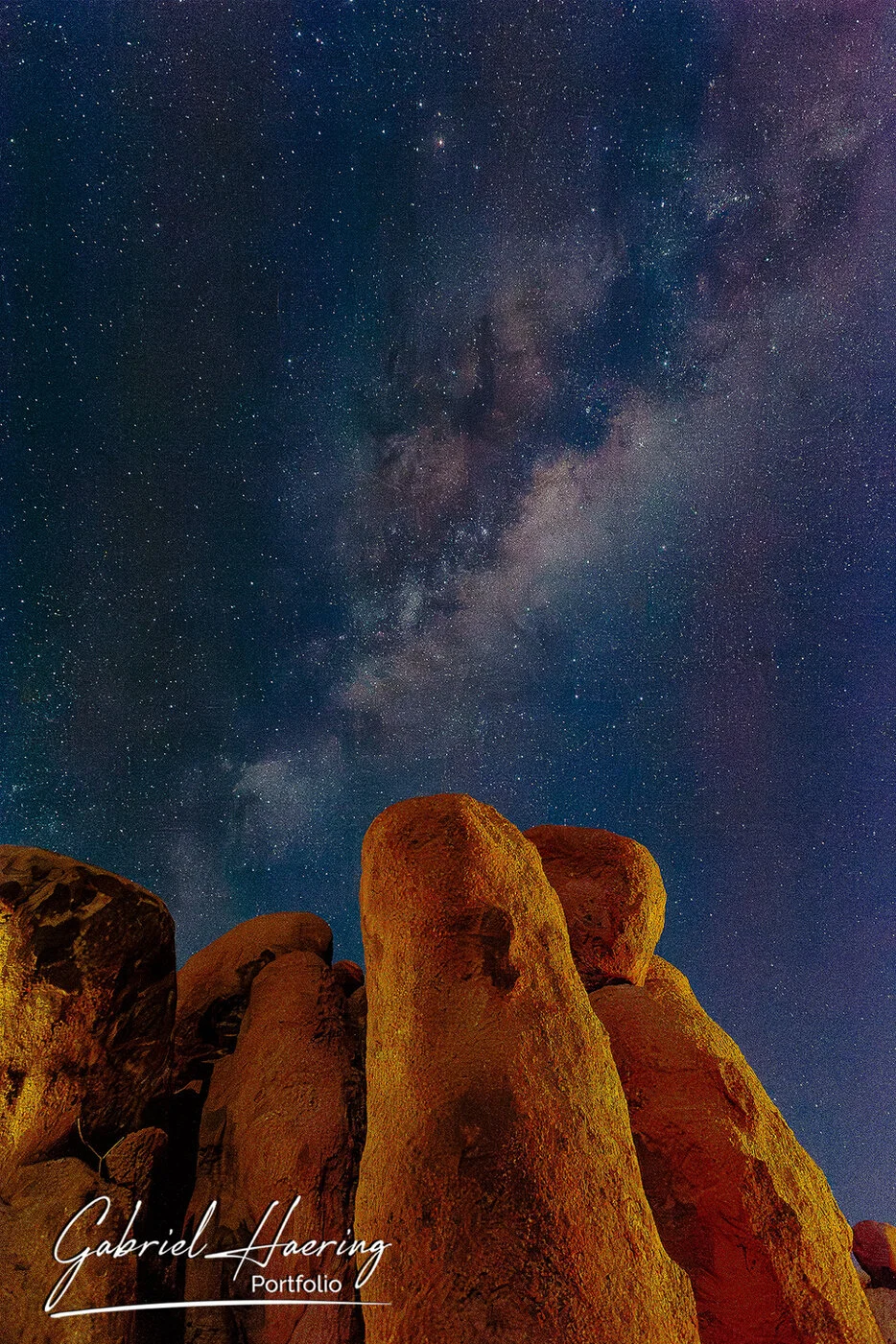
Damaraland is also extraordinary after sunset. With very low light pollution, the night sky becomes part of the landscape. Granite formations, boulders and mountains turn into silhouettes while the Milky Way rises above them.
Night photography here is not only about stars. It is about atmosphere: the stillness of the desert, the warmth of rock after sunset, and the feeling of being surrounded by a landscape much older than the human presence within it.
Color, texture and restraint
This Damaraland portfolio is rooted in natural color: red rock, pale grasses, dark basalt tones, golden light, blue shadow and the deep sky of Namibia. I try to keep the images restrained and faithful to the feeling of the place.
Damaraland does not need exaggeration. Its strength comes from space, geology, silence and the slow accumulation of detail. The most meaningful images are often those that keep this balance: a wide valley, a single track, a flower, an engraving, a mountain in evening haze, or a night sky above ancient stone.
Prints, licensing & photo safaris
If an image from this Damaraland portfolio resonates with you, it can often be acquired as a fine art print or licensed for editorial and commercial use through my main sales website.
Please mention this Damaraland portfolio when you get in touch so I can easily identify the photographs you are interested in.